Behind the Book – Merle


Merle - AW


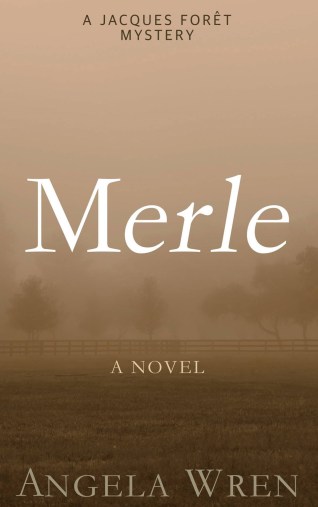
This week I’m joined by mystery writer Angela Wren (yep back to where I’m most at home – murder mystery!) Her novels are set in beautiful France which is enough to get me wanting to read for a bit of escapism. As always I’m fascinated by why people choose the locations they use and what the connection is to that place.


Tell us the basic premise of your novel?


At its most basic level, the central plot revolves around the death of a woman.  That’s were the book begins and there is a short description of the crime scene included below.

la fête des morts


 It was the tightly scrunched ball of paper that captured the attention of Magistrate Bruno Pelletier. His trained eyes swept around the room, only glancing at the naked body in the bath, and came to rest once more on the small, ivory-white mass, challenging and silent against the solid plain porcelain of the tiles. He stepped over the large pool of dried blood, iron red against the white of the floor, and, with gloved hands, he retrieved the object. Carefully prising the paper back into its customary rectangular shape, he stared at the contents and frowned as he read and re-read the single six-word sentence printed there.


 Je sais ce que tu fais


 After a moment, he dropped it into an evidence bag being held open for him by the pathologist.


 all hallows’ eve, 2009′


Did you take any inspiration from any real life crimes?


No, I’m really not that interested in reading about real-life crime. To do so seems quite voyeuristic to me.  But that doesn’t mean that I don’t take inspiration from real life and everything around me.  I do.  The scenario in Merle uses my extensive business knowledge in order to create the project management team that the dead woman worked for when she was alive.  My experience working in that field enabled me to build a whole office organisation to provide the appropriate, and I hope believable, background within which my investigator, Jacques Forêt, had to work.  Some of the scenes in the office were built from a remembered remark or conversation, and by asking myself ‘What If?’, I was able to work up a number of aspects of the central plot.  Naturally, some of it was also pure imagination.  Trying to get the blalance right is difficult but I tend to look at that kind of detail once the story is finished and I’m working through the various levels of edits required.


Why did you choose the setting you chose and do the locations hold any real life significance to you?


The office environment was critical to the central plot, so the plot really dictated the setting.  The location of the Cévennes, in south central France, kind of came about by accident.  I spend a lot of time in France and I was in the Cévennes when the very first idea for a story came to me.  Although it was only September, I woke up one morning to find that it was snowing and the whole countryside had taken on a new white blanket.  The idea that snow could cover someone’s misdeeds had taken root in my head and in December 2015, Messandrierre (Book 1 in the Forêt series) was published.  Merle follows on from Messandrierre and begins a few months afterwards.

As for significance – yes the Cévennes is very important to me.  It’s a fabulous upland area of France.  The village where I like to stay is about 1000m above sea-level, so that’s the equivalent of camping at the top of Snowden, but with better weather!  The area is sparsely populated and the villages are tiny and few and far between.  The principle city of Mende, sits in a valley about 400m further down the mountain and has a population of around 13,000.  Over here, we’d call that a small town!  The scenery is stunning, the weather can change in a moment and there’s a silence there that I can’t seem to find anywhere else.  It’s a location that I will always go back to.


Did it take a lot of research for your locations and story line?


I suppose the truthful answer to that is Yes and Yes.  I’ve been visiting France since I was a teenager, and although I didn’t know it at the time, the research about the country began way back then and has just continued constantly.  I have a book-shelf full of journals created on my many visits, I have acres of photographs and a whole forest full of leaflets, pamphlets, maps, and books about France, all of which I refer to from time to time as I’m writing.

However, specifically for Merle, I did need to get some expert advice.  Luckily I know some very kind people who were willing to put up with my constant questions.  The workings of the office IT system was one issue that I needed to research along with the detailed advice that I required from the West Yorkshire Fire Service – my next door neighbour is a fireman!


When did you know you wanted to be a writer?


When I announced to an elderly aunt one Christmas that I wanted to be Shakespeare when I grew up.  My defence in making such a rash, and now cringlingly embarrassing, statement is that I was very young at the time.  And as you can probably work out, I’m still striving to achieve that particular goal!


Oh didn’t we all want to be Shakespeare at some point! If you could choose a detective to go crime solving with who would you choose and why?


Wow!  That’s a really tough question.  I’ve always been an avid reader and I grew up on a book-diet of Agatha Christie, Conan-Doyle, Wilkie Collins, Allingham, Sayers and many more besides.  I think it would be fascinating to go sleuthing with Gordianus the Finder in the Stephen Saylor books set in ancient Rome.  That would give me the opportunity to look at Roman life and times first hand.  But then there’s Jane Marple isn’t there?  I wouldn’t so much want to go sleuthing with her but I would want to have tea with her and quiz her about herself and her life before she became the astute, elderly observer that she is in the books.  But there’s also the gutsy Vera Stanhope, she may not have much dress sense but she’s a down-to-earth solid character.  I would probably have to tidy her up before we got down to any detective work!

The more I think about this question, the more I realise that perhaps I should just count myself lucky and say Jacques.  Afterall, in creating each of the books, I go sleuthing with him at my side every time I sit at my desk to write.


What are you working on next?


I’m working on the third book, Montbel.  Jacques has an old case that he’s asked to review and once he starts to look at it, the more unanswered questions he finds.  In time, this book has moved on almost 2 years from the previous one and Jacques is living in the apartment in Mende that he bought during the course of book 2.  But, he still comes across the villagers in Messandrierre and spends time there.  Gaston and his wife still run the village restaurant and bar and Pierre Mancelle, although a little older, is still keen to be a policeman when he’s an adult.  It might be a new and intriguing case but there are still some familiar characters around.

A huge thank you to Angela for stopping by….although I kind of need a holiday in France now….

You can keep up to date with Angela and find out more about Jacques Foret and the next mystery he will be embroiled in here –


Twitter

Facebook

Goodreads

Official Website

Buy the series of books on Amazon here

Behind the Book – Forest Dancer

Forest Dancer - Susan Roebuck(1)


Sticking with my look at romance novels, and how woefully ill informed I am on them, I had the great pleasure to chat with author Sue Roebuck about her latest novel, Forest Dancer, a romance set in Portugal (somewhere I’ve always wanted to visit).

Tell us the basic premise of your novel?


It’s about overcoming self-doubt and having the courage to take life by the horns if necessary.

This is a short blurb: Forest Dancer is set in the magical forests just outside Lisbon, Portugal. Classical ballerina with a London company, Flora Gatehouse, has just recently lost her father, but she has also suffered a devastating blow in her career: her failed audition that sees her moving to a small cottage in Lisbon, Portugal, the only inheritance left to her by her father. She embraces the life of a small village with its dark secrets, and falls for the forest ranger, Marco. But the questions are can she totally become part of this little hamlet and can she ever reconnect with her dream to become a principal ballerina?


What was your main inspiration for the story? 


I live close to Sintra (which is about twenty kilometres south west of Lisbon). ( Find out more about this gorgeous locations here ) Being British, I’ve always appreciated how cool and green Sintra is in the boiling hot summers of Lisbon and I’ve often been to ballets and concerts which are held on summer evenings at one of the many monuments in this magical place. Mind you, it was so misty one night that the ballerinas kept slipping about all over the damp stage.

I also love trees and forests (Sintra has its own national park) and I wanted to portray the beauty of them – and their mystery.


I have a thing about trees too…..(endless scary forest scenes in Purgatory Hotel)

When did you know you wanted to be a writer?


The answer’s going to be what all writers say: Always! When I was fourteen I entered a writing competition and won! Goodness knows what was going through my head but the little novelette was set in World War II (of which I knew nothing) in a small village in England. The inhabitants hated the fact that the army had built a training barracks on their land and were trying all sorts of ways to get rid of them. Sounds quite ambitious, doesn’t it? One day I’ll have to read it again. I think my brother gave me a bit of help – he gave me names for the characters, one of which was called Willy Wormtongue.


I’d love to read that!

If you could spend an evening in a Portuguese cottage drinking wine and eating good food, with any famous people – alive or dead- who would you choose?


Well, Byron visited Sintra and I think he would have to be one of the guests. We’d have a riotous time, I think, and drink all the wine that was on offer. Another guest would be Vasco de Gama who was the first explorer to navigate from Europe to Asia. I might have a go at him about his treatment of the natives he came across. Then I’d invite Saint Anthony of Lisbon because I like him and I think he and Byron would have a great discussion. And, also for Byron, I’d invite one of Portugal’s most famous poets and writers. I’d eavesdrop on their conversation for hints.


Ah Byron, I’d love to meet him, can I come too?

What are you working on next?


On another in the Portuguese series (the first one was called “Rising Tide” and set in the Alentejo region of Portugal – which is between Lisbon and the Algarve – in a small fishing village that time and most of Portugal has forgotten). “Forest Dancer” is the second. The next one is called “Joseph Barnaby” and takes place in Madeira. Joe is a farrier who prevents the favourite steeplechaser to run in the Grand National because he believes the horse isn’t fit enough to race. The aftermath of hate-mail, death threats and blackmail send him whirling into a deep depression and all he wants is to go to the end of the world. He finds just the place in Madeira.

Thank you so much for stopping by Sue!

You can get Forest Dancer from Amazon here

Keep up with Sue online and find out more about her here:

Links:

blog: http://www.susanroebuck.com

Facebook: https://www.facebook.com/SusanRoebuckauthor/?ref=bookmarks

Twitter: https://twitter.com/sueroebuck


Behind The Book – Betrayal

BETRAYAL PHOTO

This week I have the pleasure of welcoming fellow Cat Lesley Field to my blog to discuss her latest book Betrayal. I recently discovered that I have very few romance novels on my read list – Wuthering Heights seems to be the only one! So in an attempt to remedy this I am having a chat with Lesley about her ‘contemporary romance.’


Tell us the basic premise of your novel?


I’m never really sure where my ideas come from, which is probably a bit scary.

However, Betrayal, is about a lawyer, Jessica, who thought her life was settled and she knew where she was going. Then suddenly it was all gone and she was faced with starting again in a new city and in a new job. But a chance meeting forced her to face her own inhibitions and she ended up having a one night stand with someone she felt an instant connection with. But inhibitions returned in the cold light of day and she fled, never expecting to see him again. But life has a way of taking charge and her one night stand appeared again. Sadly things were not as she thought and she was not prepared to be betrayed again. Fighting the attraction between them she then found herself caught up in a plot to frame someone. But is she in time to save them? And will she get her happy ever after?  You will have to read the book to find out.


Did you take any inspiration for your story from real life?


Partly.  Before I retired I was a Personal Injury Lawyer so I gave my heroine the same profession. She became disillusioned with the law, and to some extent I did towards the end of my career. So I guess I took that from my own personal experiences. There is a horse in the story and again that is taken from my own love of horses.


Why did you choose the locations you use and did it take a lot of research? Do the locations hold personal significance?


I set my contemporary romances in Canada, as it is the home of my heart. My parents were going to emigrate before I was born, but then changed their minds, so I really should have been born Canadian. I love the country and my husband and I have family and friends there so visit as often as we can. The location just outside Calgary is based on personal knowledge. The town where my heroine moves to is loosely based on a town we visited. For research I use the internet, or just go back into my head and remember visits and what I did, what I saw and how I felt at the time. There is a section in Betrayal which is set in The Core shopping mall in Calgary. I went there with my husband for research and we had lunch and listened to the grand piano being played. So that scene is taken from our visit.


What is you ideal writing environment?


My ideal writing environment would be to have my own writing room where I had a computer set up permanently, with all my research folders to hand. That is my dream. Reality is, I write on my laptop which is on the dining table. So I have to clear everything away when we need to eat in the evening. But I have a wonderful view of the garden so I can’t really complain.


If you could have an evening in a hotel restaurant with any famous character/person alive or dead, who would you choose?

I think I would love to meet with Sarah Maclean who writes historical novels. I write historical as well as contemporary and I love her style of writing.


What are you working on next?


At the moment I am working on an historical series called, Lords in Love. There will be 4 books in the series. I have books 1 and 2 completed. I have just finished the first draft of book 3 and book 4 is still in my head.

Betrayal is available now on Amazon through Crooked Cat Books!


Keep up with Lesley online here –

www.lesleyfield.com

Facebook

Twitter

Behind the Book – Topaz Eyes

new TE(1)


It gives me great pleasure to welcome the the lovely Nancy Jardine to my blog today. Her book Topaz Eyes caught my eye and I wanted to get the background inspiration for such an amazing adventure!


Welcome  Nancy, thank you so much for taking the time to chat with me!

Hello, Anne-Marie. Thank you for the opportunity to visit your blog. I aim to ‘get out’ a lot more this year so your invitation is much appreciated!


Tell us the basic premise of your novel?

Topaz Eyes has been called a ‘fabulously dangerous quest for a precious collection of emerald jewellery’ that once belonged to a Mughal Emperor. It’s also been called ‘ a deep plot of intrigue across Europe’ and beyond. The novel centres on a fictitious European family of third generation cousins. In their hunt for hugely expensive missing jewellery that the family once owned, some cousins are nice but others are downright nasty, even murderous.

Why did you choose the locations you chose and do they hold any real life significance to you?

All are personally significant in some form. The story begins in the beautiful university town of Heidelberg, Germany, chosen because my daughter spent a year at the university and I visited her there. Keira Drummond, my main female character, also spent time at Heidelberg University – isn’t that an amazing coincidence (*wink, wink*)? Some of the action takes place in Amsterdam, Holland, because I lived in Holland for three years and adore the country. I won’t give away any spoilers but one of the complex relationships in the story mirrors a situation I found myself in when I lived in Holland. Vienna features just because it’s a fabulous place to be a tourist. I decided that one cousin had to be American so I used locations in Minnesota, USA, which I’ve also been to. Keira Drummond is an Edinburgh lass because I wanted a ‘Scottish’ element in the story.

What inspired this exciting adventurous novel?

Topaz Eyes is my second contemporary mystery that revolves around an ancestral theme. The first ‘Family Tree’ I invented for my mystery Monogamy Twist  was a fairly simple one but when I started Topaz Eyes I  wanted to create a much deeper mystery with a bigger cast of related characters who had a common purpose linking them together. I then had to think up an exceptionally absorbing reason for a bunch of third generation cousins to be on a murderous quest, family members who are essentially all strangers at the outset of the novel. The 1880s matriarch of the family is from an Amsterdam family who own a prestigious jewellery business. This meant I could have lots of contemporary action happen in different worldwide locations since her descendants end up scattered around after the Second World War. I mainly used my memories of the locations which meant only some up-to-date fact checking was necessary. I remember having a lot of laughs when I was creating the family tree and the incidents that happen in the story!

Did it take a lot of research to come up with the story behind the jewellery once owned by a Mughal Emperor?

My main research for this novel was about emerald collections, especially those originally owned by Mughal emperors. I’m fascinated that a piece of jewellery designed for a Mughal Emperor in 1580, 1680 or even 1780, could be completely different by 1880! I hadn’t really appreciated that designs created for a particular woman (wife or one of the many concubines) were rarely appropriate for another woman and that it was commonplace for the gems to be reset into new jewellery. That cemented a really deep mystery because if you don’t have many clues about what an item might currently look like, then how difficult is it to bring that collection together? Topaz Eyes ended up being a mystery within a mystery but you’ll have to read the story to uncover that connection!


If you could go on a global adventure with anyone (alive or dead) who would you choose?

I’m cheating here because although I write contemporary mysteries, I also write historical fiction. In Book 4 of my Celtic Fervour Series (unpublished), my main characters are mainly Celtic but there’s also General Gnaeus Julius Agricola. Agricola was the commander of the Ancient Roman army which marched all the way to north east Scotland in c. A.D. 84 and then they left without properly absorbing the area into the Ancient Roman Empire! The only reason we know this happened is because Agricola’s son-in-law – Cornelius Tacitus – wrote about Agricola’s military campaigns. I’d love to journey back to c. A.D. 95 and spend time in Rome because that’s probably when Tacitus was writing about Agricola’s exploits in northern Britannia (The Agricola was published in A.D. 96). That way I might get the true version of what happened! And…I’d love to describe to  Tacitus what Rome is like today having visited there in 2016.

What are you working on next?

The big plan is to have Book 4 of my Celtic Fervour Series published in the spring (2018). After that I’ve got two projects already started that need a lot of work. The first is Book 2 of my Rubidium Time Travel Series- a Victorian adventure. The second is a family saga that begins in Scotland c. 1850 – Book 1 (of 3?) being another Victorian setting. Then in the fullness of time I’ll get back to Book 5 of my Celtic Fervour series…or maybe I should write that next? Who knows (**smiley face here**)


Nancy Jardine is a member of the Romantic Novelists Association, the Scottish Association of Writers, the Federation of Writers Scotland and the Historical Novel Society. She’s published by Crooked Cat Books and has delved into self publishing.


You can find her at these places:

Blog: http://nancyjardine.blogspot.co.uk  Website: www.nancyjardineauthor.com/

Facebook: http://on.fb.me/XeQdkG & http://on.fb.me/1Kaeh5G

email: nan_jar@btinternet.com  Twitter https://twitter.com/nansjar

Amazon Author page http://viewauthor.at/mybooksandnewspagehere

Goodreads https://www.goodreads.com/author/show/5139590.Nancy_Jardine


Behind the Book – The Soulweaver

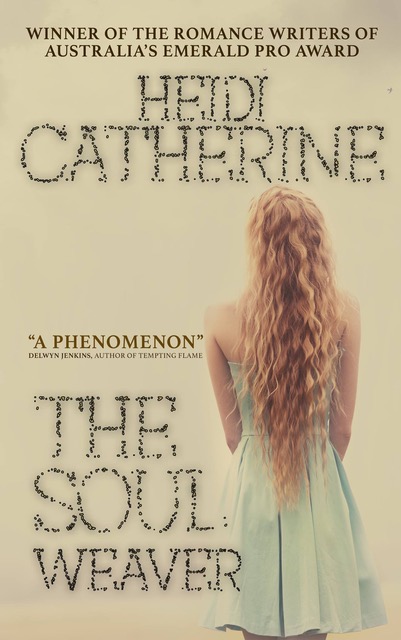
Final Cover Soulweaver


This week I’m very excited to be talking to Australian author Heidi Catherine about her new novel The Soulweaver.

I’ve always had a fascination with the afterlife and the concept of reincarnation, and they are major themes that I have kept coming back to in my own writing. Everyone feels differently about the idea of an afterlife and everyone has a different idea of what it might be like. (If you have read Purgatory Hotel you will know my own vision is a bit unpleasant for those that deserve it.)

When I read the synopsis of Heidi’s novel I was instantly intrigued – I had found a kindred spirit! So I was quite eager to pick her brains about one of my favourite subjects and learn more about her own thoughts that had inspired the novel.


Tell us the basic premise of your novel?

The Soulweaver is a story about a girl who’s haunted by memories of having lived before. As these memories sharpen, she has to choose between the man she loved in her past life and the man she loves now. I was fortunate enough for this book to win the Romance Writers of Australia’s Emerald Pro award, which was a huge honour.

What or who inspired you to become a writer?

My mum has always loved to write and had a children’s book published when I was in my early twenties. This was great inspiration for me to turn my own love of writing into something more, as I could see what was possible with hard work and persistence. Mum is now my biggest fan and reads all of my first drafts. Her very unbiased opinion is that they’re all brilliant…


Are your locations based on real places?

The Soulweaver is set in Australia, Hong Kong, London and New York, which are obviously all real places. But there are also scenes that are set in ‘the Loom’, which what most people would call heaven or hell. It’s described in the book as “a place where reward and redemption are rolled into one”.  If we do go somewhere after we die, I’ve always thought it would be the one place. I can’t see how it’s possible for the universe to be so black and white that one soul is considered good and another evil, when there are so many shades of grey. I really enjoyed being able to explore this concept as I wrote the novel.


Did it take a lot of research for your locations and do they hold any real life significance to you?

The story is told in parts, with each part taking place in a different city from the point of view of a different character. I’m Australian so the scenes set there didn’t require too much research and I’ve spent time in Hong Kong and London so could also draw on my experiences there. I’ve never been to New York, so those chapters required a little more research. Google is a writer’s best friend! I really liked how changing the setting gave each part of the book a distinctive feel. As for the Loom, that required a whole lot of imagination rather than research, which I always find far more enjoyable.

There’s a supernatural feel to the story, and obviously a lot of it is based around reincarnation, is this something you believe in?

The idea of reincarnation has always fascinated me and I would very much like to believe it’s real. I’ve heard some incredible (and very convincing) stories about children remembering their past lives, with these memories fading as they’ve grown older. I’ve also met people who I’ve been certain I’ve met before. In the first chapter of The Soulweaver, Hannah sees Reinier for the first time and is overwhelmed with the feeling she’s seen him a million times, yet she’s seen him never. It’s a feeling I’m sure many readers will relate to. Reincarnation makes a lot of sense to me, and although nobody can be completely certain as to what happens to us after we die, I’m positive that something happens. The Soulweaver is just one of a billion possibilities.

Tell me an ideal set up for a day of writing – where are you, is there any music etc?

I mostly write at home when my kids are at school. We moved house about a year ago and I claimed one of the living spaces as my writing room. I’ve filled it with books and have a desk in the corner near the window. Usually I’ll light a candle, put on some music and read my angel cards. Then I’ll get stuck into it. If the words don’t flow, then I’ll take my dogs for a walk and try again. My dogs are big fans of writer’s block.


What are you working on next?

I’m working on Books 2 and 3 of The Soulweaver series, which follow my characters into their next lifetimes. I also have a couple of crime novels and a middle grade novel sitting on my computer, which I’d like to revive. And I’ve recently published a prequel novelette to The Soulweaver series, which is called The Moonchild and available for free on Amazon.

The Soulweaver is out now on Amazon – Buy The Soulweaver on Amazon

Book 2 of the Soulweaver series The Truthseeker is out through Crooked Cat Books on 19th March 2018.


You can keep up with all of Heidi’s news here!


Heidi’s Website

Heidi on Twitter

Heidi on Facebook

Heidi on Goodreads


Behind the Book – Winter Writerland

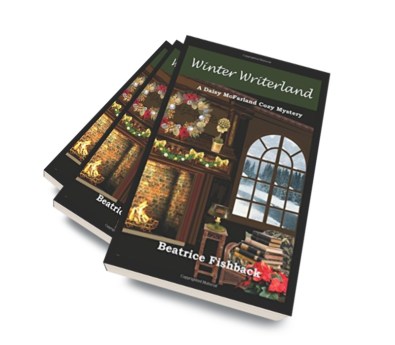
Winter WQriterland coverBeatrice


Continuing my conversations with authors and the inspirations behind their work, I had the great pleasure of chatting with Beatrice Fishback. Beatrice hails from New York and lived for 20 years in the UK where she picked up a love of all things British. She now lives in Carolina but still uses the UK as a setting for her work. Her most recent novel Winter Writerland takes place here so I decided to pick her brains on the subject matter.

This is also a perfect choice for something to read over the Christmas holidays – as long as you don’t mind a spot of murder with your mince pies…..


Tell us the basic premise of your novel?

Daisy McFarland is an American spinster who has retired to England after teaching elementary school for thirty years. An aspiring novelist, Daisy looks forward to attending the Crime Writer’s Conference in Branick for the third year in a row during the Christmas holidays. What she doesn’t anticipate is finding a body floating in the frozen lake and who could have possibly committed this dastardly deed.


The story features a murder at a writers Conference -Did you take any inspiration from any real life crimes? 

I can’t say I took any inspiration from a real life crime but I love to watch Midsomer Murders, Lewis and a selection of other U.K. dramas. In fact, I’m hooked on all of them to include Father Brown.


Why did you choose the setting you chose and do the locations hold any real life significance to you?

Last summer I attended the Swanwick Summer Writing School. There I met some wonderful new friends. Chatting over a glass of bubbly we thought the place was the perfect Agatha Christie setting for a cosy. We began to brainstorm and by the time I left the conference I had the skeleton idea for this tale.


Is your sleuth Daisy based on anyone?

I seem drawn to writing about mid-life women. Maybe because when I began my writing career I was approaching this season of life. My character in “Dying to Eat at the Pub,” another cosy mystery, is also about a woman who now faces life married to a retired man and she’s anything but ready to sit in front of warm fire and die in her recliner.


What/who inspires you most as a writer?

When I read stories that bring fiction alive, I’m inspired to give writing another try in the hopes that the next attempt will be that much better than the last. I especially enjoy Alan Bradley’s series about a much younger sleuth named Flavia de Luce. I love his attention to detail and descriptive settings.


Do you have a favourite author? Besides Alan Bradley, I enjoy Sir Arthur Conan Doyle and never tire of his Sherlock character.


What are you working on next? My challenge is whether to start another novel, or finish the one that’s nearly completed. I love beginning a new story with fresh characters. But I have half of the sequel to “Dying to Eat at the Pub” and I’d like to see that published in the New Year.


You can catch up with Beatrice here;

www.beasattitudes.net

www.facebook.com/Beasattitudes

And treat yourself to a copy of Winter Writerland for some cosy Christmas reading material;

Winter Writerland on Amazon

Behind the Book – ‘Oh! What A Pavlova’ by Isabella May


IMG_3235I recently had the good fortune to have a chat with author Isabella May about my book Purgatory Hotel. While we were talking I managed to ask a few questions of the lady herself as her new book held an interest for me.

Despite the light-hearted name and appearance of  the book, its subject matter of domestic violence is a darker element that has been misrepresented so many times in the past. I was eager to see how she handles it. Plus there’s cake so, you know……


Tell us the basic premise of your novel

It’s a tricky one to condense down into an Elevator Pitch… but here goes:

One woman’s bid to flee her abusive relationship amidst the lure of cake, travel, many an unsuitable man, and the whispering of Glastonbury’s ley lines.


Did you take any inspiration for your story from real life?

I think it’s impossible for reality and fiction NOT to cross at some point. Whilst Kate’s story is fabricated, I have been through Domestic Violence myself, and I had a burning desire to dispel some of the myths that surround it. In particular, the misconception that only the uneducated and working class fall prey to abuse. DV does not discriminate! I also wanted to shine a light on the increasing phenomenon of the victim living two very different lives: one ‘for the cameras’ – ie. friends/family/the office… and the other, the very much darker existence that plays out when the curtains are drawn, the front door locked.


What do you think is the most accurate depiction of domestic violence on film or in a book? 

I have yet to come across anything that accurately sums it up in its entirety, and I honestly think that’s because it is virtually impossible to do so. The one thing I have learned is that domestic violence doesn’t discriminate or pigeonhole. No two experiences are ever the same and the contrast from victim to victim is vast, all of which only highlights the need for open-mindedness. My own novel is in no way representative of the average domestic violence experience either. It’s just Kate’s story, but it does serve to life the lid on that all too common assumption: only the uneducated are abused.


What do you think the biggest, most represented myths around domestic violence are? 

1: It can only happen to women. Many men are also affected.

2: That it is reserved for those who are poor, uneducated and working class. Anybody from any walk of life can find themselves in this situation.

3: That physical abuse happens on a daily basis. In Kate’s situation (in many situations) it doesn’t. The emotional abuse tends to play out as a daily ritual to grind the victim down. But the physical side of things can be sporadic, often with no ETA, taking the abused by complete surprise when they have let their guard down.
Onto a lighter subject…..Cake is a big theme in the book, what’s your favourite cake?

If I was really pushed to choose, then the classic Victoria Sponge. It’s so hard to beat, especially with fresh whipped cream and a cuppa to cut through it all. But I adore most cake (with the exception of anything from a Clean Eating recipe… or containing chunks of stem ginger!)


Why did you choose the setting you chose, and do the locations hold any real life significance to you?

I had long felt (and still do!) that Glastonbury is under-represented in mainstream fiction. It was high time it took centre stage. As for the other locations, many of them I have visited, and as I adore travel, it was a great way for me to pay homage to some fabulous international cities… and their cake!


Did it take a lot of research for your locations and story line?
I had to jog my memory as to some of the sights, sounds and smells. Pinterest made the perfect place to do that… as well as get sidetracked by its millions of hygge-esque pictures.


I’m intrigued by the mention of Glastonbury ley lines in the synopsis… can you tell me anything about the role they play?

The ley lines are a metaphor really for all of the spiritual signs that Kate collates throughout the story. They get louder and louder as the plot develops. But will she act on their advice? Or will fear and procrastination have its way?


What are you working on next?

My second novel is called The Cocktail Bar. Once again, it is set in Glastonbury and it will be published on 13th February 2018. Here’s a bit of blurb:


Rock star, River Jackson is back in his hometown of Glastonbury to open a cocktail bar… and the locals aren’t impressed.Seductress Georgina is proving too hot to handle, band mate Angelic Alice is messing with his heart and his head, his mum is a hippie-dippy liability, his school friends have resorted to violence – oh, and his band manager, Lennie AND the media are on his trail.But River is armed with a magical Mexican elixir which will change the lives of the Three Chosen Ones. Once the Mexican wave of joy takes a hold of the town, he’s glad he didn’t lose his proverbial bottle.

Pity he hasn’t taken better care of the real one…

download

You can get a copy of the book here; Oh! What A Pavlova – in paperback and on Kindle

You can follow Isabella May on her website and social media here:

www.isabellamayauthor.com

 Twitter – Isabella May

Facebook

Instagram – @isabella_may_author


One Weekend in London

There is never any shortage of things to do in London, hundreds of art galleries and museums all over town showing their collections 7 days a week all year round.

There are also events that visit London for a short time, a brief fling with the city that exists for only a few months. Last weekend I managed to fit in three such events.

Late morning on Saturday saw me and Mr O take the northern line up to Kings Cross where I was happy to see the old world of seedy grimness gone and replaced with new shops and trendy bars and restaurants. Only 3 years ago I passed through there every day and knew the area like the back of my hand, but like the rest of the city, it is forever changing and improving, leading me to realise if you take a long enough break from any part of London, by the time you go back it will feel like a different place. I also managed to get a picture of Harry Potter’s Platform 9 ¾ and have a look at the new St Pancras Hotel which looks amazing albeit well out of my price range.Image

Anyway I hadn’t gone up there to see the train station, I was up there to visit the British Library, and see something that has never been in London before. I am a huge fan of American writer Jack Kerouac; a school friend bought me ‘On The Road’ for my 15th birthday and that was the beginning of a love affair with a form of literature I had been unaware of up to that point. I had read the classics, fallen in love with Heathcliff a dozen times over reading Wuthering Heights, read random books of Russian literature after discovering Vladimir Nabokov, delved into the darkness of Thomas Mann and Franz Kafka and had touched the edges of Americana by reading ‘The Catcher in The Rye’ too many times. Kerouac was a whole new world for me, open roads, open lives and the style of his writing was so free and clear that I got sucked into it, reading as many of his books as I could lay my hands on, depending entirely on my local library and second hand bookshops. Ahh…memories of days before Amazon when it was all about actually leaving the house to hunt down books.

‘On The Road’ is not my favourite novel by Kerouac, but it was my first so when I saw that the British Library was going to be home to the original scroll of the novel I knew I would have to go and see it. As you may already know, Kerouac wrote the book in 3 weeks typed on one 120 foot scroll of paper made of rolls of tracing paper that he had sellotaped together so he wouldn’t have to interrupt his creative flow by stopping and putting in new sheets of paper. The book that was published is an edited version of this original scroll, but the entire text is now available in book form.

Image

I can’t explain, nor will I try to justify why this was a magical experience for me. It was my equivalent of going to a concert or festival; this was as close as I will ever get to my literary idol, as though he was there in the distance on a stage, an indistinct form but him all the same, his presence in the room as real as it could be. I said to Mr O afterwards that I was grateful that he had come along, as he doesn’t have the same passion for Kerouac as I do, I had basically dragged him from one end of London to the other to look at an old yellow roll of paper.

After this we made our way south again to central London and the National Portrait Gallery where a free exhibition of photo’s and magazines of Marilyn Monroe are on show. ‘Marilyn Monroe; A British Love Affair’ is a nod towards the time she spent in the UK filming ‘The Prince and The Showgirl’ with Laurence Olivier. This era of her life having renewed interest following the movie ‘My Week With Marilyn’ which covers the same period of her life. A small but beautiful collection of photo’s by some of Britain’s greatest photographers of the time including some of my favourites by Cecil Beaton. They also have a lovely collection of rare British magazines with Miss Monroe on the cover.

Sunday night covered another of my favourite things; burlesque. And in particular what I have always Imageconsidered the best burlesque, the Crazy Horse. The famous Parisian revue has had shows all over the world, I first saw them when I was in Las Vegas in 2006, but was very glad to discover they were coming to London with the new Forever Crazy, a collection of the most popular acts from the last 60 years. What sets them apart from other revues is that the individual acts themselves are very simple – it is the lighting effects that make them so spectacular. If you want to see what it’s all about before forking out for the live show, check out the documentary movie ‘Crazy Horse’ made last year to show what goes on backstage and onstage at the famous original Paris venue just off the Champs Elysees.

I’d recommend the real thing though, as the London purpose built venue is quite amazing; a voluptuous velvet lined theatre with a bar area I wish was permanent – glittering chandeliers, kitsch fluorescent lights and a dressing room mirror themed bar. They also have a fabulous act (inbetween naked lady acts) called Up and Over it who literally and wordlessly tap, drum and slap their way through a re-enactment of a lovers quarrel. Entertainment all round and a damn good giggle, go get some.

Forever Crazy is at the Southbank Centre until December 2012

On The Road; Jack Kerouac’s Manuscript Scroll is at the British Library until 27th December 2012

Marilyn Monroe; A British Love Affair is on at the national Portrait Gallery until 24th March 2013

About London

There’s this idea that people should know the very moment when they fall in love, that for some reason there would be a moment, ‘stars would explode in the sky’ as Nick Cave put it. But they don’t, there is no epic firework display, the earth continues to turn and nobody else on earth knows it has happened. That’s why you forget the precise moment.

I don’t recall the moment I knew I was in love with London; I think it had built slowly over the years. But I feel it more clearly now, every morning when my bus turns out onto London bridge and suddenly the sides fall away, I am over the river and I can see the city laid out before me, Tower Bridge to my right, St Pauls to my left, and everything in-between and I catch a breath, my heart swells and I feel it. Love.

Image

I grew up out on the coast in south east Essex, an idyllic childhood of parks and playgrounds and trips to the beach after school. I used to walk home from school sometimes along the seafront, even in winter just to feel the biting air and feel alive again after a day of dusty brained learning and stuffy classrooms. I knew I was lucky to grow up there, 45 minutes train ride from London and blessed with fresh air and man-made beaches.

When I was younger, my parents used to take me to London once a year during the October half term holidays. It was so busy and lively and the shops sold things I didn’t see back home, bookshops there were palaces of literature laid out on several floors where I would lose whole afternoons in the poetry section.

I always longed to visit Whitechapel due to my interest in creepy tales of Jack the Ripper but it remained a mysterious tube station that we never got off at. As far as I was concerned it was all still dark alleys and Victorian street urchins up there.  As an older teenager I visited Camden with friends and felt at home in all the alternative shops and market stalls, although always slightly nervous of the enormity of it, days out would end with a tired scuttle back to Fenchurch Street and what felt like the longest train journey ever.

In my 20’s I visited a few more times, going to gigs mainly, staying over in hotels occasionally, but I still felt so removed from it all, like it was all behind glass and I was just there as visitor in a giant museum.

When I was 29 I went to Brick Lane for the first time and I loved it, shortly after some of my friends moved to Whitechapel so I started going up more regularly, finally getting off the tube at that mysterious station. The first time I went up on my own felt weird, I was going to places I had never been before and instead of that feeling of distance, I was starting to feel at home.

ImageThe day after my 30th birthday I went on a date with the man I eventually married. We met up at Fenchurch Street and spent the whole day walking around, along the Southbank and back into the city where we wandered down alleyways and found hidden churches, gargoyles and streets empty of life. He showed me a part of London I had never seen before. The City of London is a different place on a Sunday compared to the weekdays when people pour in and out of the skyscrapers and fill in all the gaps between the buildings. At the weekend all that remains is quiet corners, old buildings and new building living side by side quite peacefully, endless amounts of closed branches of Starbucks and Eat that have no purpose without the city workers that fill them during the week days.

I think maybe I fell in love twice that day. With the man I had just met and with the city I had just been shown.

I left my life by the coast and got a job in North London, soon after I moved to South London. I had never lived anywhere other than where I grew up but it felt right, like it was time for me to move on.

ImageI have lived in London for 4 years now, and I never ever get tired of it; my journey to work takes me from the foot of the Shard, past Southwark Cathedral, past Monument, up Bishopsgate, past the Gherkin and the Heron, through Shoreditch and to Hackney. Every morning I look out from the bus as though it’s all still new to me, it’s all still so beautiful to me.

At weekends we take long walks, to Brick Lane and Spitalfields, along the Southbank to Westminster or over to the back streets of Covent Garden and Soho. The difference for me now is that I don’t feel distant anymore, that I belong and I am part of it. Even though my awe still allows that feeling of visiting a giant museum, I feel now that instead of being behind glass I can touch the exhibits and even wander around back rooms not open to the public.

I take photographs incessantly like a day-tripper, I go to an endless supply of art and photography exhibitions, I wander back streets looking for street art and I say a prayer every time I have to brave Oxford Street. I know I won’t live here forever, for one reason or another I will end up by the coast again one day, so while I am here and its all on my doorstep I want to see as much as I can.

Image

This summer in London has been wonderful, the energy and excitement around the Olympics was inspiring; for all our pre-Olympic moaning about stupid mascots, transport and other problems we all got swept away by the ridiculously happy vibe that was created once we started winning gold medals. The transport system ran fine, people talked to each other, we hugged ugly Wenlock and Mandeville statues around town.

London fell in love with itself.

I have so much to say about London, but the rest can wait.


(All Photo’s Copyright of the author)