Behind the Book: Heathcliff


Back in 1992 when I was a moody, misunderstood teenager, desperate to read all the literature I could lay my hands on, I bought a cheap copy of Wuthering Heights after seeing a poster for the movie adaptation starring Ralph Fiennes. I loved the book and not long after watched as many tv/movie adaptations as I could.

I studied it later for my GCSE’s and re read it countless times over the years that followed.

I was in love with the supernatural element of the love story, the fierce bond between Cathy and Heathcliff that seemed to survive beyond death, her childish rejection of him tying their souls together forever. It’s fair to say it influenced my own novel in part, just because I could never get past the drama of the fiery love affair.

When I heard that my fellow Crooked Cat Books author Sue Barnard was releasing a spin off novel I was intrigued, and very excited to learn more. And also to have a bit of a geek off about Heathcliff with a fellow fan.


Tell us the basic premise of your novel?

In the original Wuthering Heights, Heathcliff disappears from the story for three years and returns as a rich man.  What might have happened to him during that time?


Wuthering Heights is one of my favourite novels. I recall being very affected by the relationship between Cathy and Heathcliff. How would you describe it to someone who has never read the book? 

In a word: complicated!  She loves him (or claims to), yet she marries someone else – then expects her husband to welcome her old love back into their lives!  Result: anger, frustration and heartache all round.


What inspired you to take on the story and create a backstory for Heathcliff’s missing years?

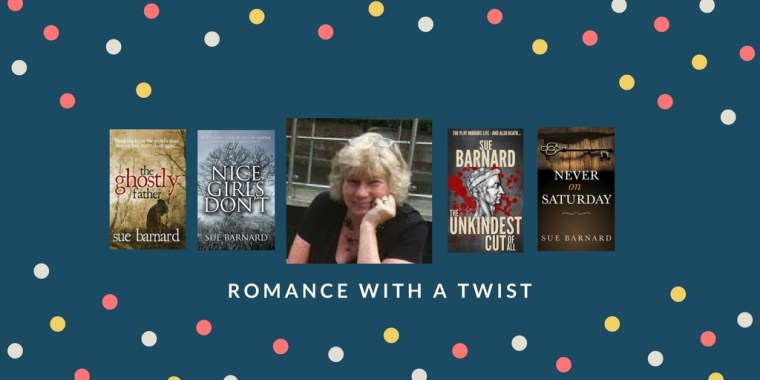
It was a chance remark by a former school friend.  More years ago than either of us care to remember, we studied Wuthering Heights for English Literature O-Level (as it then was), along with Shakespeare’s Julius Caesar.  The latter went on to provide the setting for my third novel, The Unkindest Cut of All (a murder mystery set in a theatre).  My friend commented on the connection, and asked jokingly if my next writing project would also be based on something we’d done at school.  I replied, equally jokingly, “How about Heathcliff?”  At the time I laughed off the idea, but somehow it just wouldn’t go away.


 Many people feel very negatively about Heathcliff; I have always had a sort of sympathy for him. How would you describe your feelings towards him?

When I started writing the book I promised myself that I would try to portray Heathcliff in a sympathetic light.  I think he’s a very troubled soul, and I’ve tried to explore the possible reasons why.  Pivotal to the story, of course, is that he never gets over Cathy’s decision to marry Edgar Linton.

To be honest, I’ve never really liked Cathy.  She starts off as a spoiled little brat, grows into a spoiled big brat, and ends up as a spoiled dead brat.  Heathcliff and Edgar are both devoted to her (in their different ways), but in my opinion she isn’t worthy of either of them.

One interesting discovery I made during the course of my research is that Heathcliff is only about sixteen or seventeen when he disappears.  Having seen him portrayed several times on screen by actors who are in their twenties or thirties, I hadn’t previously appreciated how young he was.


Did it take a lot of research for your locations and story line?

Yes.  It’s always important to get your facts correct, but even more so if you’re writing anything historical.  You can be sure that if you get even the tiniest detail wrong, some eagle-eyed reader will pick up on it, and it will come back to haunt you for ever.

The dates in Wuthering Heights are very precise (Heathcliff’s missing years are 1780-1783), which proved to be extremely constraining.  I originally wanted him to have spent those years as a pirate, or possibly to have made his fortune in the American or Australian gold rush.  But when I started my research I soon discovered that I couldn’t use either of those ideas; the heyday of piracy was too early, and the gold rush years were too late.  So I had find something which did fit with those exact years, and work my story around that.  As to what that turned out to be, you’ll have to read the book to find out!


What is your writing environment like? Where is it etc?

It’s all over the place.  My computer (where I do my main writing) is set up at a desk in the front room, but I have notepads and scraps of paper in just about every room in the house, because I find that inspiration can strike at any time.  My smartphone, which lives in my pocket, is particularly useful if I need to make notes when no other option is available.


 If you could sit down and have drinks with any famous writers (alive or dead) who would you choose?

I’d start by inviting all my fellow-authors at Crooked Cat Books.  Then I’d invite Shakespeare (having written two novels and several poems inspired by his work), and Emily Brontë (though with some trepidation, in case she doesn’t like what I’ve done with her most famous creation!).  Then I’d add some great crime writers, such as Agatha Christie, Dorothy L Sayers, Josephine Tey and Val McDermid, plus some comedy writers, such as Ronnie Barker, David Renwick, Tony Robinson, Ben Elton, Stephen Fry, the Horrible Histories team and the Monty Python gang.  And no writers’ gathering would be complete without Terry Pratchett and J K Rowling.

At this rate, I think I’m going to have to hire a whole pub.


Well that sounds like a great night out! I will definitely be there!

Big thanks to Sue for giving me a sneaky early interview about Heathcliff, I am very much looking forward to reading the book and returning to the world of the brooding anti-hero again.

Until then you can follow her on all the links below and read her other books while you wait to find out what became of the mysterious man during his missing years…..


Blog   Facebook   G+   Twitter   Instagram   Amazon  Goodreads
Romance with a twist(2)

NOVELS:

The Ghostly Father: Amazon, Smashwords, Kobo, NookApple iBooks, GooglePlay

Nice Girls Don’t: Amazon, Smashwords, Kobo, NookApple iBooks

The Unkindest Cut of All: Amazon, Smashwords, Kobo, NookApple iBooks

Never on Saturday: Amazon


Heathcliff: coming in 2018


Behind the Book – Hunter’s Chase

HUnters Chase cover


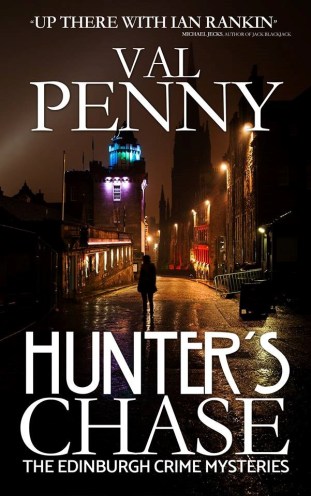
This week I am delighted to welcome author Val Penny to my blog. Her Edinburgh based crime novel Hunter’s Chase is due out through Crooked Cat Books on 2nd February 2018.

I am a lover of crime fiction, from Jo Nesbo to Patricia Cornwall and Agatha Christie to Arthur Conan Doyle, my love of sleuthing has been firmly set from a young age (I blame my parents!) I grew up in a busy household full of brothers and sisters who also loved to read crime fiction and I would always grab what they had finished with. The Detective is always the greatest character (followed closely by their nemesis) and I always love the development of their personality and how they solve the crime in question.

So naturally when I heard about Hunter’s Chase and found I had the opportunity to ask a few questions I jumped at the chance!


Tell us the basic premise of your novel?


Hunter by name, Hunter by nature: in Hunter’s Chase, Detective Inspector Hunter Wilson struggles to ensure the crime in Edinburgh does not go unpunished. Hunter’s Chase introduces a new detective, DI Hunter Wilson into Tartan Noire.

I think all crime novels explore the triumph of good over evil. The readers know the criminals will not succeed. Still, the thrill of the chase and the problems overcome to achieve justice for the victims must enthral and satisfy the readers.


Did you take any inspiration from any real life crimes? 

I did not refer to any specific real life crimes but I did want to explore power and politics. Also, as I have a large family, the importance and problems caused by family ties is interesting to me.

Big cities all have issues with illegal drug use. One of the hidden problems is the risk to the health and security by people who are functioning drug abusers, who may continue to study or hold down challenging jobs. I find this both confusing and fascinating.


Is your lead character, DI Hunter Wilson inspired by anyone?

Hunter Wilson, like all my characters in Hunter’s Chase, is a combination of several people that I have found interesting. I needed my main protagonist to have certain characteristics including patience, perseverance and a desire to achieve justice for those who could not attain that for themselves. Hunter is a compassionate man who fights for the underdog and is a fine team player. These are important qualities in my main character.

But I also needed Hunter to have flaws. Everybody has faults and to make Hunter believable, he had to have them too. He is not a saint. He is divorced, he is untidy, he likes to win, he bears a grudge.


Why did you choose the setting of Edinburgh and do the locations hold any real life significance to you?

Although I am originally from California, USA, I lived in Edinburgh, Scotland for many years, so it is a city I know well. I chose Edinburgh as the setting for Hunter’s Chase because it is a beautiful, multi-cultural city which is well-known and loved around the world. Edinburgh is a big enough city for any problem that Hunter needs to solve to plausibly have taken place. Nevertheless, because it is a city of only half a million people, in many ways it is like a big village: there is a feeling that everybody knows everybody else. That is an amusing conceit when I am writing.


Did it take a lot of research for your locations and story line, how did you research the police work?

I did need to do a lot of research for Hunter’s Chase. I was surprised by how much I enjoyed that.

When I was choosing places for action to take place in my novel, I needed to check that what I was asking of my characters could actually happen. That was fun. Revisiting and exploring again the beautiful city of Edinburgh is always a joy.

Also, you will not be surprised to know that I do not have first-hand knowledge of drug trafficking! I found the research for that quite exciting: of course it was all theoretical research.

I had to research the roles of Crime Scene Investigators too and received a great deal of assistance with that from my friend Kate Bendelow. Her book, The Real CSI: A Forensic Handbook for Crime Writers, is indispensable. I was also lucky to have good support when I was researching police procedures. This came from former Detective Chief Inspector Stuart Gibbon. His book, The Crime Writers’ Casebook is invaluable to those writing historical or modern day crime stories.


What are you working on next?

I am presently working on the sequel to Hunter’s Chase –  Hunter’s Revenge. My publishers, Crooked Cat Books, have just confirmed that it will be published in August/September 2018, so I better get a move on and finish it.

Hunters Chase will be released through Crooked Cat Books on 2nd February 2018, pre order your copy here

You can keep up with whats happening with Val on the following links;


Val Penny Website

Val on Facebook

Friends of Hunter’s Chase Facebook Group

Val on Twitter

Val at Crooked Cat Books

Behind the Book – The Last Plantagenet

TLP-FinalCover(1)

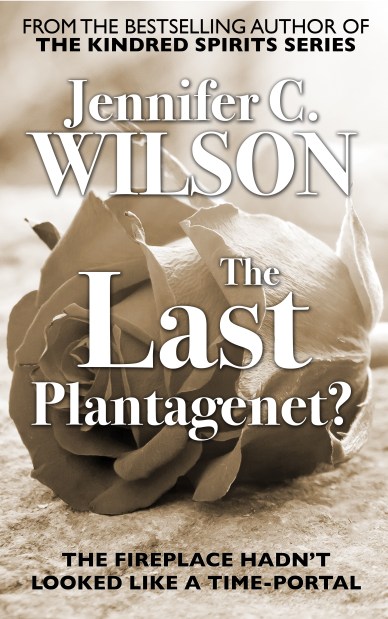
For my final author interview of the year, I had a chat with Jennifer Wilson, author of the Kindred Spirits series; paranormal fiction set in the Royal Court of the 1400’s – so clearly my love of all things spooky mean I had to have a chat with the lady herself!

Her most recent book is slightly different but again returns to the era of Richard III. Ive always been fascinated by this period of history and Jennifer really knows her stuff so this interview has been a real pleasure.

Tell us the basic premise of your novel?

The Last Plantagenet? is a timeslip historical romance, following history-lover Kate as she gets transported back in time from 2011 to the travelling court of Richard III in 1485. That would be difficult enough to acclimatise to, but then she also catches the eye of the King of England himself – how will she cope?


As the book is historical fiction – did you have to do a lot of research for accuracy?

I was really keen that even though it’s a bit of a fantasy, with the timeslip element, that the facts were still correct. So yes, I did do my research, in particular to make sure that the court was in the right place at the right time, and that people who shouldn’t have been there weren’t there. I had a really good book which went into a lot of detail about the last 100 days of Richard’s reign, and that was a great resource, to track each day’s activity. Happily, having one of the main characters as an entirely fictional individual, there was a little leeway in where I could go with her.

As it was also my first go at self-publishing, I was keen that it was in good shape, and didn’t accidentally detract from my Kindred Spirits series, so I checked everything at least twice!


Where do you go to get inspiration for your locations and storylines?

For TLP, it was all desk-based, although I have been to the site of Nottingham Castle, where the book is mostly set. Most of the time, I do need to go somewhere to really write how I want to about it. For example, for the third Kindred Spirits novel, I had written a whole scene about Anne of Cleves’ tomb, only to discover that you couldn’t physically see what I had my characters seeing from a particular spot, and I had to rewrite the whole thing.

I found especially with places like Westminster Abbey or the Tower of London, they do have a very specific atmosphere, and I like to capture that. Plus, I love visiting historical sites anyway, so it’s not that much of a hardship.


Do you have a favourite author?

I’m always torn here between three, but I think Philippa Gregory is still the author I look forward to a new release from. It was reading The Other Boleyn Girl on the insistence of a colleague that introduced me to the Tudor world, and inspired me to get back into writing historical fiction again, so I feel I owe that book a lot.

I also love the writing of Elizabeth Chadwick and Anne O’Brien, who both manage to capture strong central female characters, without falling into that trap of having their heroines too modern in their attitudes and thoughts.


What/who inspires you most as a writer?

For me, it’s places. There’s nothing better for me than visiting historical sites or buildings, and just mooching about, getting a feel for the place, and who might have spent time there in the past. That’s where my inspiration comes from. I’ve been wanting to set a story in an abbey (other than Westminster!) for years, but couldn’t get a good enough grasp on it until this summer, wandering around Glenluce Abbey, when the whole thing magically fell into place. By the end of the day, I had the whole synopsis, ready to go.


Which historical figures would you most like to sit down to dinner with?

Well, I hate to be obvious, but I would, of course, enjoy sitting down and sharing a cup of wine with Richard III. He was king for such a short time, but involved in so many events and situations important to British history. Also, who wouldn’t want to hear his side of the story regarding the Princes in the Tower? Although, I think I would leave that until the end of the meal, in case he refused to speak to me again after that…


What are you working on next?

I’m thrilled to bits that the third Kindred Spirits novel, set in Westminster Abbey, will be released by Crooked Cat in summer 2018, so I’m looking forward to getting stuck into the editing process for that in the new year. I find self-editing so hard, but love receiving critique and feedback from others, so that’s part of the publishing process I really enjoy.

As for new writing, I have a couple of ideas for other timeslip, like the abbey tale I mentioned above, and one with a more local flavour, inspired by a reservoir we used to visit when I was little.

JenniferCWilson-HolyroodPalace


About Jennifer

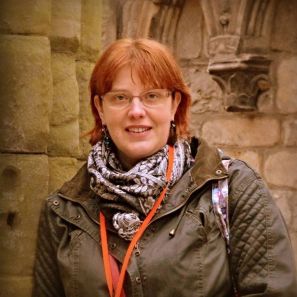
Jennifer is a marine biologist by training, who spent much of her childhood stalking Mary, Queen of Scots (initially accidentally, but then with intention). She completed her BSc and MSc at the University of Hull, and has worked as a marine environmental consulting since graduating. Enrolling on an adult education workshop on her return to the north-east reignited Jennifer’s pastime of creative writing, and she has been filling notebooks ever since. In 2014, Jennifer won the Story Tyne short story competition, and also continues to develop her poetic voice, reading at a number of events, and with several pieces available online. She is also part of The Next Page, running workshops and other literary events in North Tyneside, including the prize-winning North Tyneside Writers’ Circle.

Jennifer’s debut novel, Kindred Spirits: Tower of London, was released by Crooked Cat Books in October 2015, with Kindred Spirits: Royal Mile following in June 2017. She can be found online at her website, on Twitter and Facebook, as well as at The Next Page’s website. Her timeslip historical romance, The Last Plantagenet? Is available for download from Amazon.


Behind the Book – Winter Writerland

Winter WQriterland coverBeatrice


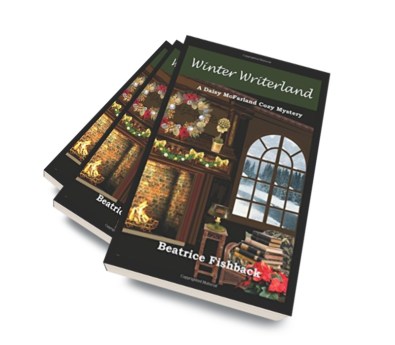
Continuing my conversations with authors and the inspirations behind their work, I had the great pleasure of chatting with Beatrice Fishback. Beatrice hails from New York and lived for 20 years in the UK where she picked up a love of all things British. She now lives in Carolina but still uses the UK as a setting for her work. Her most recent novel Winter Writerland takes place here so I decided to pick her brains on the subject matter.

This is also a perfect choice for something to read over the Christmas holidays – as long as you don’t mind a spot of murder with your mince pies…..


Tell us the basic premise of your novel?

Daisy McFarland is an American spinster who has retired to England after teaching elementary school for thirty years. An aspiring novelist, Daisy looks forward to attending the Crime Writer’s Conference in Branick for the third year in a row during the Christmas holidays. What she doesn’t anticipate is finding a body floating in the frozen lake and who could have possibly committed this dastardly deed.


The story features a murder at a writers Conference -Did you take any inspiration from any real life crimes? 

I can’t say I took any inspiration from a real life crime but I love to watch Midsomer Murders, Lewis and a selection of other U.K. dramas. In fact, I’m hooked on all of them to include Father Brown.


Why did you choose the setting you chose and do the locations hold any real life significance to you?

Last summer I attended the Swanwick Summer Writing School. There I met some wonderful new friends. Chatting over a glass of bubbly we thought the place was the perfect Agatha Christie setting for a cosy. We began to brainstorm and by the time I left the conference I had the skeleton idea for this tale.


Is your sleuth Daisy based on anyone?

I seem drawn to writing about mid-life women. Maybe because when I began my writing career I was approaching this season of life. My character in “Dying to Eat at the Pub,” another cosy mystery, is also about a woman who now faces life married to a retired man and she’s anything but ready to sit in front of warm fire and die in her recliner.


What/who inspires you most as a writer?

When I read stories that bring fiction alive, I’m inspired to give writing another try in the hopes that the next attempt will be that much better than the last. I especially enjoy Alan Bradley’s series about a much younger sleuth named Flavia de Luce. I love his attention to detail and descriptive settings.


Do you have a favourite author? Besides Alan Bradley, I enjoy Sir Arthur Conan Doyle and never tire of his Sherlock character.


What are you working on next? My challenge is whether to start another novel, or finish the one that’s nearly completed. I love beginning a new story with fresh characters. But I have half of the sequel to “Dying to Eat at the Pub” and I’d like to see that published in the New Year.


You can catch up with Beatrice here;

www.beasattitudes.net

www.facebook.com/Beasattitudes

And treat yourself to a copy of Winter Writerland for some cosy Christmas reading material;

Winter Writerland on Amazon

Behind The Book – Social Anxiety Revealed

Very excited with this week’s author chat as I got the chance to interview Miriam Drori – who actually was my editor on Purgatory Hotel. Herself an established writer, her most recent release was non-fiction looking at the subject of Social Anxiety. Mental health and the study of it has always been an interest of mine, and indeed features in my own work and life and I was very pleased that Miriam was willing to discuss the background to writing her book.

SAR Cover


Tell us the basic premise of your book?

Social Anxiety Revealed explains all the different aspects of social anxiety. It makes extensive use of quotes from many people who have experienced social anxiety and who agreed for me to use their words anonymously. This enabled me to show how, despite the similarities, we’re all individuals and that social anxiety affects each of us in different ways.

The book is intended for everyone – sufferers and non-sufferers, because everyone knows or will come across someone who has the condition.

The reviews call it a no-nonsense book that’s well-written and easy to read. I’m glad, because that’s how I meant it to be.


You have previously written fiction – what inspired you to move to this subject?

Ah, it only seems as if this is what I did. In fact, I wrote this book before any of the fiction. The book was inspired by two discoveries: that social anxiety is much more common than many people think, and that most people are unaware of its existence. I became passionate about putting this right by raising awareness of it. If more people knew and understood it, many more sufferers would get the help they need to tackle it.

After I tried and failed to get the book published, I turned my attention to writing fiction and eventually got a romance (Neither Here Nor There) accepted by Crooked Cat Books. That was followed by the historical novella, The Women Friends: Selina, the first in a series and co-written with Emma Rose Millar. When Crooked Cat began to publish non-fiction, I proposed my book about social anxiety and it was published, after being revised by me, in August 2017.


Were you inspired by any personal experiences?

Certainly, and some of those experiences appear in the book. I think it’s what makes this book unique. There are many self-help books that claim to show how to overcome social anxiety and are written by experts. Some of these have proved very helpful for some sufferers, while others have been unable to gain any benefit from them. I approach the topic from the other side of the patient/therapist divide and hence appeal to a wider audience.


How did you research for this subject?

For several years, I belonged to an online forum for social anxiety sufferers. All the topics in the book came up in discussions on the forum. One or two were topics I specifically raised on the forum so that I could include opinions on them in the book.


Do you have a favourite author?

That’s a hard question, as my favourite author changes frequently. I know I particularly like reading stories in which I (the reader) understand more than the narrator. Such stories include The Remains of the Day by Kazuo Ishiguro, The Curious Incident of the Dog in the Night-Time by Mark Haddon and Eleanor Oliphant is Completely Fine by Gail Honeyman.


Who would you most like to sit down to dinner with to discuss social anxiety?

My sixth form (years 12 and 13) teachers, who wrote on my school reports that I needed to change my behaviour, making me feel that I was to blame for my problems. I would explain to them, if they listened at all, that I wasn’t capable of changing all by myself at that stage in my life, and that they should have seen to it that I got help, although I expect that would have been asking for too much in the 1970s.


What are you working on next?

I’m back in the world of fiction, but still with social anxiety, as my main character suffers from it. He is overwhelmed, to say the least, when he finds himself on the way to Japan to try and sell a computer system. And that’s not all. Karaoke is also on the agenda!


Wow that sounds fun! Looking forward to reading Miriam’s next book – big thanks to her for letting me interview her.

You can follow Miriam on the links below, and get yourself a copy of Social Anxiety Revealed.

Miriam


Links

Social Anxiety Revealed                                The Women Friends: Selina         Neither Here Nor There

Miriam Drori can be found on Facebook, Twitter, Goodreads, Pinterest, Wattpad and on her website/blog and social anxiety blog.


Behind the Book : The Girl in the Gallery

Girl in the Gallery

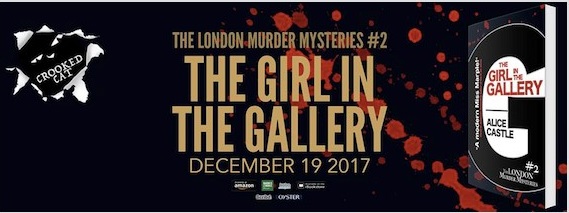
I was drawn to this book by Alice Castle as I was aware that it was set in Dulwich, as was her last book ‘Death in Dulwich’. Being as I used to frequent the area when I lived in Peckham I was instantly snared, I love reading books set in London as I find it so much easier to get into stories when I know the setting well. London and a murder mystery – my ideal book – lucky for me Alice agreed to discuss her book ahead of its release on 19th December.

Tell us what your latest book is about

Hi Anne-Marie, thanks so much for hosting me! My latest book, The Girl in the Gallery, is a cozy crime murder mystery with a dash of romance. It’s set in the very beautiful Dulwich Picture Gallery, open to the public for 200 years this year. The book opens when my single mum amateur sleuth, Beth Haldane, stumbles on a terrifying new exhibit when she pops into the gallery before work. It’s the second in my London Murder Mysteries series, the first, Death in Dulwich, was published earlier this year, but you can read either as stand alone stories.


Did anything specific inspire the storyline?

My storyline is inspired by Dulwich Picture Gallery itself – it’s stuffed with amazing art, and the building itself is very unusual. At its heart is a mausoleum, containing the dead bodies of the original collectors in marble coffins, on display to the public. Weird and quite creepy! I have always thought it would be a brilliant location for a murder mystery.


Tell us more about Dulwich and any other London locations you use, do they hold meaning?

I love Dulwich. I lived there for four years, after returning from nearly a decade in Belgium. I found the area, and the people, really welcoming. I am repaying them by setting a series of grisly murders in their midst, which I really hope they won’t take the wrong way. It is a perfect, village-like setting, where people know everything about each other – or think they do. It’s a modern St Mary Mead, the place where Agatha Christie’s Miss Marple solved unspeakable crimes. I was really thrilled when a reviewer of my first book in the series, Death in Dulwich, said my heroine Beth Haldane was a modern Miss Marple. I’m planning to venture away from Dulwich with other books in the series but, like Beth, I will always have a soft spot for SE21.


Do you have a favourite author?

I have loads – Agatha Christie, of course, then Dorothy L Sayers, Margery Allingham, Ngaio Marsh, PD James, Ruth Rendell, Val McDermid, MC Beaton, Simon Brett… the list goes on. I love whodunits! I do read other books, I’m in a book group and I plod through whatever’s chosen, but I always come back to a nice murder mystery in the end.


What made you want to be a writer?

A teacher at my infants’ school. I can’t even remember her name, but she very kindly praised a sentence I’d written and I thought to myself, ‘this is something I can do.’ Good teachers are so wonderful and not nearly treasured enough.


If you could have a night of drinks and literary discussion with any writers (alive or dead) who would you choose?

Oh, I think Dorothy Parker would be a must, and then Shakespeare might be fun, Jane Austen of course… I think that lot might be daunting enough! I’m sure I wouldn’t open my mouth in that august company, but I’d be taking notes for my next novel, that’s for sure.


Will there be a 3rd instalment for Beth Haldane to solve?

There definitely will be a next installment, I am writing it now. It’s called Calamity in Camberwell and this time, Beth is on the trail of a missing friend, with plenty of obstacles thrown in her way. And she’s giving online dating a try! I’m hoping it will be out by mid-2018. After that, there’ll be plenty more mysteries to solve, if I have my way.


Get yourself over to Amazon now and pre-order The Girl in the Gallery here!

While you are there, grab the first Beth Haldene mystery Death in Dulwich

Alice

Alice Castle

MyBook.to/GirlintheGallery

MyBook.to/1DeathinDulwich

Facebook

Blog: DD’s Diary

Twitter: @DDsDiary


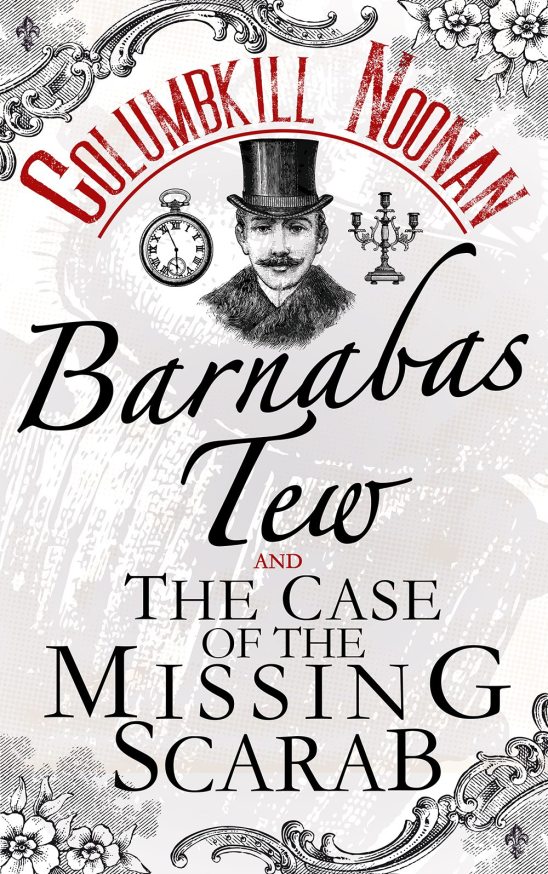
Behind the Book: Barnabas Tew and the Case of the Missing Scarab


cover-small

This book has several elements that drew me in – firstly its set in my home town of London, which is always a plus. Add to that its set in Victorian London, which is even cooler. Then add a Private Detective and Egyptology and there you have the recipe for a brilliant adventure novel! And of course – there being a whole trip to ‘The Land of the Dead’ thing set this firmly on my radar.

The author Columbkill Noonan hails from beautiful Maryland, USA, so I was very excited when she agreed to have a long distance chat with me about her book.Columbkill Noonan


Tell us the basic premise of your novel?


Barnabas Tew is a somewhat neurotic, extremely anxious, and rather particular sort of person. He also happens to be a somewhat sub-standard private detective. Through luck (or misfortune, depending on your perspective!) he is whisked off to the Egyptian afterlife to solve a case for Anubis, the Egyptian god of the dead. Things just keep going wrong from there…


Why did you choose Victorian London and do the locations hold any real life significance to you?


I love historical fiction, and I love London, and everything that is quintessentially British. I’m also fascinated with ancient mythologies, so I figured I’d marry the two.


Did it take a lot of research for your locations and story line?


It did! I spent a lot of time researching the Egyptian gods and goddesses. But I think researching is fun, so it wasn’t really like work at all for me.


If you could have a few drinks and an evening of conversation about the afterlife with any 3 famous figures (alive or dead) who would you pick? 


Eleanor of Aquitane, for one. Was she really as much of a pip as history makes her out to be? If so, then I want to hang out with her for sure. Cleopatra, for pretty much the same reasons. And lastly…Genghis Khan. Was he so warlike out of a need to preserve and protect his people from invasions? Or was he just kind of a jerk? I need to  know…


Do you believe in an afterlife? What do you think it would be like?


I do believe in an afterlife, and I rather hope that it’s not like the ancient Egyptian idea! I tend to think of it in terms of the Buddhist or Hindu theology, where a person would be reborn until they figure things out and then they can get off the merry-go-round, so to speak. Heaven sounds pretty nice, though. It would be great if that’s how it was. I guess I’ll find out…someday!


What are you working on next?


The sequel to “Barnabas Tew and the Case of the Missing Scarab”, of course! Can’t just leave him hanging. He and Wilfred are off to the Viking afterlife, and they are really in way over their heads this time.


‘Barnabas Tew and the Case of the Missing Scarab’ is published by Crooked Cat Books available in paperback and Kindle.

 Buy the book from Amazon.com

Buy the book from Amazon.co.uk


Connect with Columbkill Noonan for news about her next book;

Visit Columbkill’s Website

Facebook

Twitter


Behind the Book ; The Wood Collecting Stag

Books have been a part of my life since I was a child, my parents encouraged me to read from a very young age and it stuck.

Now I have a child myself I found that I have done the same with her, from the fabric books she used to chew as a new baby to the big colourful storybooks she now loves.

So these days I find myself reading as much adult books as I do ‘Meg and Mog’ and ‘The Gruffalo.’

For that reason I thought it would make sense to speak to children’s book author – another world from what I write myself. As strange fate would have it – within weeks of my own book being published, a dear old school friend Hannah Murray, found herself published too. Her book The Wood Collecting Stag is a collection of 6 children’s stories, perfect for ages 3 and up, was based on characters he had created in her craft shop with wool and yarn. So I had a chat with her about how she created the world of Heidigurumi.


Tell us the basic premise of your book?


I’ve always had the stories of the characters in my shop. In my head. I usually am thinking about their personalities and ‘jobs’ when I’m actually making them. My Dad encouraged me to write the stories down. I’ve not had time before (I don’t have time now!!) But I knew I wasn’t getting any younger and I have a vision for Heidigurumi. One I want to leave as a legacy for my children. It’s up to me to try and bring that vision to a reality.  I felt the time had come to really put my all into it and try to pull it all together. Books was the next step. Though it was a much bigger step than I anticipated. 1am finishes coupled with 5am starts over the last 2 months have taken their toll on me!


What inspired you to write the book?


Lots of things. But mainly I long for little children to hear the stories I have in my head, to fall asleep thinking of these funny characters going about their business. Just as we do with all our books as kids. The biggest inspiration for me author-wise would be Enid Blyton. I practically read everything by her as a child. The Faraway Tree, The Enchanted Forest, and as I got older, Famous Five, Secret Seven. All these books took me to exciting places.


Have you always wanted to write children’s fiction? Have you written in any other genre’s?


I’m quite childlike minded!! I give voices to animals whenever I see one (even dogs in the street!) My children think I’m bonkers. So in a word, no. I would not contemplate writing a different genre. I have too much stored up in my head to share with children for there to be room for anything else.


You also run an Etsy shop called Heidigurumi, what can you tell me about what you make and sell?


I opened Heidigurumi in November 2009. It’s evolved through the years really. The things I sell are woodland related. I make needle felted characters (a process of sculpting raw unspun wool into solid structures using a single barbed needle). These characters are usually one offs. They can take between a few evenings to a few weeks to make. They also have a character card with them. There is a hand drawn watercolour postcard with all their individual details on. I take custom orders too. As my collection of characters grew, so did the imaginary World they lived in in my head, Heidigurumi became the actual woodland they all lived in alongside each other. Which brought me onto the books I suppose.


I make other bits and pieces, like little crochet birds in hanging nests. They are quite funny. Just all handmade items I make during winter evenings! I’m not a ‘goer outerer’ at all. I’m home every single night. Making things. In fact I’ve had three evenings out in the last three years!

Heidigurumi


What are you working on next?


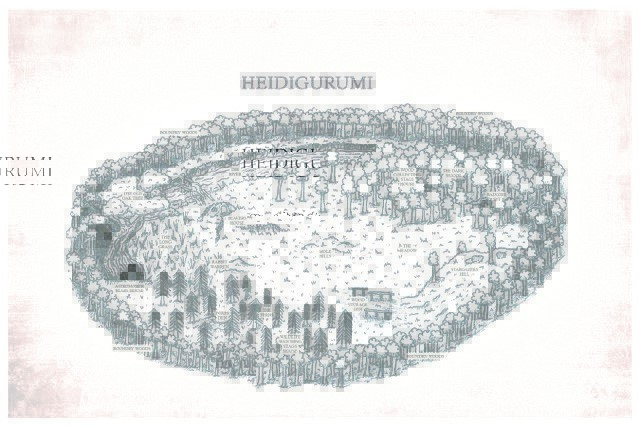
Next in the pipeline is a book for another character in my shop. Stargazing Badger. He is hilarious. An old badger that spends a lot of time on Stargazer Hill (see map above) he has a notebook he draws the constellations in. He has stories to be told and they are ready, though they are not on paper yet! I’m hoping to have this out by Christmas. It’s the illustrations that take more of the time. Wood Collecting Stag had over 70 hand drawn, watercolour painted pictures (which you can’t see in the paperback but they are all colour painted) and that took forever!! So it’s a daunting prospect to do similar before Christmas for S.Badger. But I’m better under pressure. All the children out there are my motivation.


Buy ‘The Wood Collecting Stag’ on Amazon 

 Heidigurumi Shop on Etsy

Heidigurumi on Instagram

Heidigurumi on Facebook

All Characters and Images ©2009-2017 Hannah L Murray


Behind the Book – ‘Oh! What A Pavlova’ by Isabella May


IMG_3235I recently had the good fortune to have a chat with author Isabella May about my book Purgatory Hotel. While we were talking I managed to ask a few questions of the lady herself as her new book held an interest for me.

Despite the light-hearted name and appearance of  the book, its subject matter of domestic violence is a darker element that has been misrepresented so many times in the past. I was eager to see how she handles it. Plus there’s cake so, you know……


Tell us the basic premise of your novel

It’s a tricky one to condense down into an Elevator Pitch… but here goes:

One woman’s bid to flee her abusive relationship amidst the lure of cake, travel, many an unsuitable man, and the whispering of Glastonbury’s ley lines.


Did you take any inspiration for your story from real life?

I think it’s impossible for reality and fiction NOT to cross at some point. Whilst Kate’s story is fabricated, I have been through Domestic Violence myself, and I had a burning desire to dispel some of the myths that surround it. In particular, the misconception that only the uneducated and working class fall prey to abuse. DV does not discriminate! I also wanted to shine a light on the increasing phenomenon of the victim living two very different lives: one ‘for the cameras’ – ie. friends/family/the office… and the other, the very much darker existence that plays out when the curtains are drawn, the front door locked.


What do you think is the most accurate depiction of domestic violence on film or in a book? 

I have yet to come across anything that accurately sums it up in its entirety, and I honestly think that’s because it is virtually impossible to do so. The one thing I have learned is that domestic violence doesn’t discriminate or pigeonhole. No two experiences are ever the same and the contrast from victim to victim is vast, all of which only highlights the need for open-mindedness. My own novel is in no way representative of the average domestic violence experience either. It’s just Kate’s story, but it does serve to life the lid on that all too common assumption: only the uneducated are abused.


What do you think the biggest, most represented myths around domestic violence are? 

1: It can only happen to women. Many men are also affected.

2: That it is reserved for those who are poor, uneducated and working class. Anybody from any walk of life can find themselves in this situation.

3: That physical abuse happens on a daily basis. In Kate’s situation (in many situations) it doesn’t. The emotional abuse tends to play out as a daily ritual to grind the victim down. But the physical side of things can be sporadic, often with no ETA, taking the abused by complete surprise when they have let their guard down.
Onto a lighter subject…..Cake is a big theme in the book, what’s your favourite cake?

If I was really pushed to choose, then the classic Victoria Sponge. It’s so hard to beat, especially with fresh whipped cream and a cuppa to cut through it all. But I adore most cake (with the exception of anything from a Clean Eating recipe… or containing chunks of stem ginger!)


Why did you choose the setting you chose, and do the locations hold any real life significance to you?

I had long felt (and still do!) that Glastonbury is under-represented in mainstream fiction. It was high time it took centre stage. As for the other locations, many of them I have visited, and as I adore travel, it was a great way for me to pay homage to some fabulous international cities… and their cake!


Did it take a lot of research for your locations and story line?
I had to jog my memory as to some of the sights, sounds and smells. Pinterest made the perfect place to do that… as well as get sidetracked by its millions of hygge-esque pictures.


I’m intrigued by the mention of Glastonbury ley lines in the synopsis… can you tell me anything about the role they play?

The ley lines are a metaphor really for all of the spiritual signs that Kate collates throughout the story. They get louder and louder as the plot develops. But will she act on their advice? Or will fear and procrastination have its way?


What are you working on next?

My second novel is called The Cocktail Bar. Once again, it is set in Glastonbury and it will be published on 13th February 2018. Here’s a bit of blurb:


Rock star, River Jackson is back in his hometown of Glastonbury to open a cocktail bar… and the locals aren’t impressed.Seductress Georgina is proving too hot to handle, band mate Angelic Alice is messing with his heart and his head, his mum is a hippie-dippy liability, his school friends have resorted to violence – oh, and his band manager, Lennie AND the media are on his trail.But River is armed with a magical Mexican elixir which will change the lives of the Three Chosen Ones. Once the Mexican wave of joy takes a hold of the town, he’s glad he didn’t lose his proverbial bottle.

Pity he hasn’t taken better care of the real one…

download

You can get a copy of the book here; Oh! What A Pavlova – in paperback and on Kindle

You can follow Isabella May on her website and social media here:

www.isabellamayauthor.com

 Twitter – Isabella May

Facebook

Instagram – @isabella_may_author


The Long Road : A Writers Journey.

Twelve years ago I was living in a different town, married to a different man and living a very different life.

Put simply I was a very unhappy person, afraid to try and get out of an abusive marriage.

But I like to think that despite the dark days, a lot of good came from those very unhappy times, I learned a lot, I became a better person in the years that followed my eventual departure from the relationship and I also wrote a lot of fiction as a way of escaping from the trap I’d got myself into.

One story, which I named ‘Purgatory Hotel’ was a fixation of mine for a long time. It was inspired by a Nick Cave lyric – ‘In God’s hotel, everybody’s got a room.” While that lyric ran around my head I got to thinking about what if the afterlife was a hotel, specifically what if Purgatory – the waiting room – was a hotel? What if you did something really bad and you got sent there, with all the other bad people and you had to repent until you got to check out and go to Heaven?

And so my novel was born, a story about a girl who wakes up in Purgatory and can’t remember how she died or what crime she committed to get sent to the in between world.

I created a whole world, an afterlife of my own imagining, a decrepit old hotel, mouldering out on the edge of forever with a library full of books where everybody’s lives are being written in dusty old books as they happen. The writing stops when the breathing stops.

And my anti-hero, my victim/perpetrator has to read her whole life, each tragedy, each sordid detail, and each terrible decision as part of her punishment until she can remember her awful crime and why she ended up dead. After all you can’t ask for forgiveness when you don’t know what you did wrong.

The main characters, Dakota and Jackson became people to me, their dark hours became mine, and their brief happiness’s a source of joy to me. All this darkness born out of an unhappy life. And looking over my words now I can see the inspiration, the parallels I pulled from my own unhappy existence and placed in a fictional world. Part escapism, part exorcism.

Then twelve years after I first scribbled the ideas out on the back of my payslip envelope, a publisher said yes.

Crooked Cat Books are an indie publishers and they were just one of dozens I submitted my twisted little tale to. Lucky for me, they saw something worth printing.

So this November ‘Purgatory Hotel’ will be published and I feel like at last I can let go of my characters, stop trying to change them and leave them be, let them be who I made them to be.

Writing is hard, not because it’s a mammoth task. For me writing is hard because I don’t know when to stop, I can’t say how many edits I made to the book over the years, how many name changes, how many lines I’ve deleted. There were years when I just totally ignored it and left it behind as though I was over it and would never do anything with it.

I even self-published it under a different name but I knew I was not happy with it yet and pulled it back. All writers are different, all have their own process, my process is to sink deep into that world, write and write and not think too much about it until I go back to re-read it after I’m done. And then I find I need to add more, say more. A line of great significance in the story – “You should know by now, it’s never over.” Might as well have been me talking to myself.

The road from that day where I first scribbled the notes for the novel has been long, but it’s amazing how much life can change in 12 years, I have left the dark corridors of Purgatory behind.

I served my time.

I am glad to say the sun shines brighter these days, I am happily married and I can honestly say I am more grateful than ever for the good things in my life.


Purgatory Hotel will be released through Crooked Cat Books this November.

IMG_4981