Behind the Book – The Soulweaver

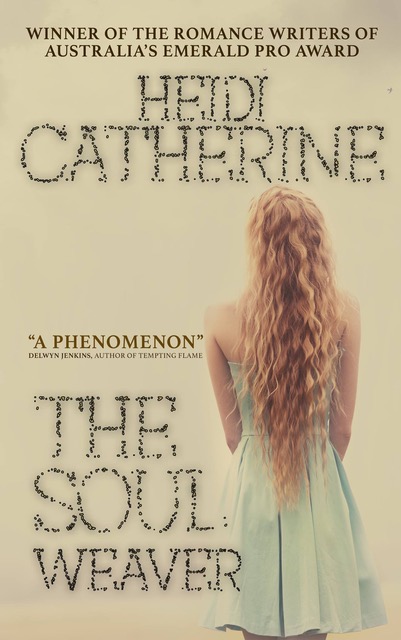
Final Cover Soulweaver


This week I’m very excited to be talking to Australian author Heidi Catherine about her new novel The Soulweaver.

I’ve always had a fascination with the afterlife and the concept of reincarnation, and they are major themes that I have kept coming back to in my own writing. Everyone feels differently about the idea of an afterlife and everyone has a different idea of what it might be like. (If you have read Purgatory Hotel you will know my own vision is a bit unpleasant for those that deserve it.)

When I read the synopsis of Heidi’s novel I was instantly intrigued – I had found a kindred spirit! So I was quite eager to pick her brains about one of my favourite subjects and learn more about her own thoughts that had inspired the novel.


Tell us the basic premise of your novel?

The Soulweaver is a story about a girl who’s haunted by memories of having lived before. As these memories sharpen, she has to choose between the man she loved in her past life and the man she loves now. I was fortunate enough for this book to win the Romance Writers of Australia’s Emerald Pro award, which was a huge honour.

What or who inspired you to become a writer?

My mum has always loved to write and had a children’s book published when I was in my early twenties. This was great inspiration for me to turn my own love of writing into something more, as I could see what was possible with hard work and persistence. Mum is now my biggest fan and reads all of my first drafts. Her very unbiased opinion is that they’re all brilliant…


Are your locations based on real places?

The Soulweaver is set in Australia, Hong Kong, London and New York, which are obviously all real places. But there are also scenes that are set in ‘the Loom’, which what most people would call heaven or hell. It’s described in the book as “a place where reward and redemption are rolled into one”.  If we do go somewhere after we die, I’ve always thought it would be the one place. I can’t see how it’s possible for the universe to be so black and white that one soul is considered good and another evil, when there are so many shades of grey. I really enjoyed being able to explore this concept as I wrote the novel.


Did it take a lot of research for your locations and do they hold any real life significance to you?

The story is told in parts, with each part taking place in a different city from the point of view of a different character. I’m Australian so the scenes set there didn’t require too much research and I’ve spent time in Hong Kong and London so could also draw on my experiences there. I’ve never been to New York, so those chapters required a little more research. Google is a writer’s best friend! I really liked how changing the setting gave each part of the book a distinctive feel. As for the Loom, that required a whole lot of imagination rather than research, which I always find far more enjoyable.

There’s a supernatural feel to the story, and obviously a lot of it is based around reincarnation, is this something you believe in?

The idea of reincarnation has always fascinated me and I would very much like to believe it’s real. I’ve heard some incredible (and very convincing) stories about children remembering their past lives, with these memories fading as they’ve grown older. I’ve also met people who I’ve been certain I’ve met before. In the first chapter of The Soulweaver, Hannah sees Reinier for the first time and is overwhelmed with the feeling she’s seen him a million times, yet she’s seen him never. It’s a feeling I’m sure many readers will relate to. Reincarnation makes a lot of sense to me, and although nobody can be completely certain as to what happens to us after we die, I’m positive that something happens. The Soulweaver is just one of a billion possibilities.

Tell me an ideal set up for a day of writing – where are you, is there any music etc?

I mostly write at home when my kids are at school. We moved house about a year ago and I claimed one of the living spaces as my writing room. I’ve filled it with books and have a desk in the corner near the window. Usually I’ll light a candle, put on some music and read my angel cards. Then I’ll get stuck into it. If the words don’t flow, then I’ll take my dogs for a walk and try again. My dogs are big fans of writer’s block.


What are you working on next?

I’m working on Books 2 and 3 of The Soulweaver series, which follow my characters into their next lifetimes. I also have a couple of crime novels and a middle grade novel sitting on my computer, which I’d like to revive. And I’ve recently published a prequel novelette to The Soulweaver series, which is called The Moonchild and available for free on Amazon.

The Soulweaver is out now on Amazon – Buy The Soulweaver on Amazon

Book 2 of the Soulweaver series The Truthseeker is out through Crooked Cat Books on 19th March 2018.


You can keep up with all of Heidi’s news here!
 

Heidi’s Website

Heidi on Twitter

Heidi on Facebook

Heidi on Goodreads


Behind the Book – Hunter’s Chase

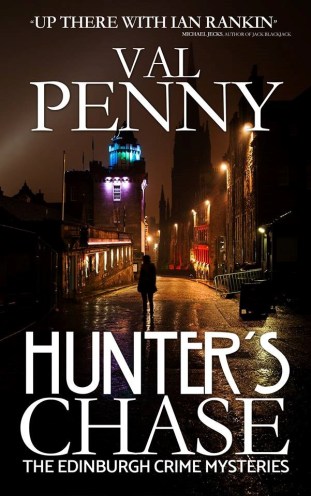
HUnters Chase cover


This week I am delighted to welcome author Val Penny to my blog. Her Edinburgh based crime novel Hunter’s Chase is due out through Crooked Cat Books on 2nd February 2018.

I am a lover of crime fiction, from Jo Nesbo to Patricia Cornwall and Agatha Christie to Arthur Conan Doyle, my love of sleuthing has been firmly set from a young age (I blame my parents!) I grew up in a busy household full of brothers and sisters who also loved to read crime fiction and I would always grab what they had finished with. The Detective is always the greatest character (followed closely by their nemesis) and I always love the development of their personality and how they solve the crime in question.

So naturally when I heard about Hunter’s Chase and found I had the opportunity to ask a few questions I jumped at the chance!


Tell us the basic premise of your novel?


Hunter by name, Hunter by nature: in Hunter’s Chase, Detective Inspector Hunter Wilson struggles to ensure the crime in Edinburgh does not go unpunished. Hunter’s Chase introduces a new detective, DI Hunter Wilson into Tartan Noire.

I think all crime novels explore the triumph of good over evil. The readers know the criminals will not succeed. Still, the thrill of the chase and the problems overcome to achieve justice for the victims must enthral and satisfy the readers.


Did you take any inspiration from any real life crimes? 

I did not refer to any specific real life crimes but I did want to explore power and politics. Also, as I have a large family, the importance and problems caused by family ties is interesting to me.

Big cities all have issues with illegal drug use. One of the hidden problems is the risk to the health and security by people who are functioning drug abusers, who may continue to study or hold down challenging jobs. I find this both confusing and fascinating.


Is your lead character, DI Hunter Wilson inspired by anyone?

Hunter Wilson, like all my characters in Hunter’s Chase, is a combination of several people that I have found interesting. I needed my main protagonist to have certain characteristics including patience, perseverance and a desire to achieve justice for those who could not attain that for themselves. Hunter is a compassionate man who fights for the underdog and is a fine team player. These are important qualities in my main character.

But I also needed Hunter to have flaws. Everybody has faults and to make Hunter believable, he had to have them too. He is not a saint. He is divorced, he is untidy, he likes to win, he bears a grudge.


Why did you choose the setting of Edinburgh and do the locations hold any real life significance to you?

Although I am originally from California, USA, I lived in Edinburgh, Scotland for many years, so it is a city I know well. I chose Edinburgh as the setting for Hunter’s Chase because it is a beautiful, multi-cultural city which is well-known and loved around the world. Edinburgh is a big enough city for any problem that Hunter needs to solve to plausibly have taken place. Nevertheless, because it is a city of only half a million people, in many ways it is like a big village: there is a feeling that everybody knows everybody else. That is an amusing conceit when I am writing.


Did it take a lot of research for your locations and story line, how did you research the police work?

I did need to do a lot of research for Hunter’s Chase. I was surprised by how much I enjoyed that.

When I was choosing places for action to take place in my novel, I needed to check that what I was asking of my characters could actually happen. That was fun. Revisiting and exploring again the beautiful city of Edinburgh is always a joy.

Also, you will not be surprised to know that I do not have first-hand knowledge of drug trafficking! I found the research for that quite exciting: of course it was all theoretical research.

I had to research the roles of Crime Scene Investigators too and received a great deal of assistance with that from my friend Kate Bendelow. Her book, The Real CSI: A Forensic Handbook for Crime Writers, is indispensable. I was also lucky to have good support when I was researching police procedures. This came from former Detective Chief Inspector Stuart Gibbon. His book, The Crime Writers’ Casebook is invaluable to those writing historical or modern day crime stories.


What are you working on next?

I am presently working on the sequel to Hunter’s Chase –  Hunter’s Revenge. My publishers, Crooked Cat Books, have just confirmed that it will be published in August/September 2018, so I better get a move on and finish it.

Hunters Chase will be released through Crooked Cat Books on 2nd February 2018, pre order your copy here

You can keep up with whats happening with Val on the following links;


Val Penny Website

Val on Facebook

Friends of Hunter’s Chase Facebook Group

Val on Twitter

Val at Crooked Cat Books

Behind the Book – The Last Plantagenet

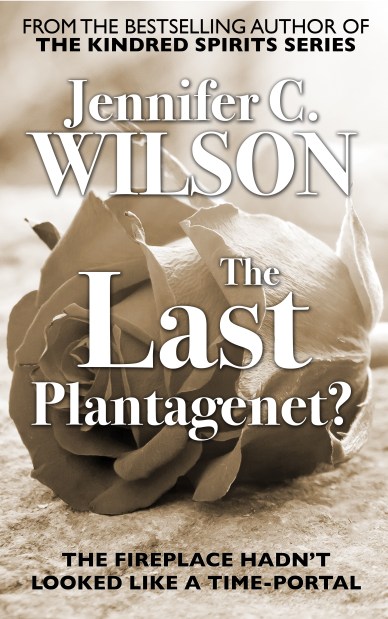
TLP-FinalCover(1)

For my final author interview of the year, I had a chat with Jennifer Wilson, author of the Kindred Spirits series; paranormal fiction set in the Royal Court of the 1400’s – so clearly my love of all things spooky mean I had to have a chat with the lady herself!

Her most recent book is slightly different but again returns to the era of Richard III. Ive always been fascinated by this period of history and Jennifer really knows her stuff so this interview has been a real pleasure.

Tell us the basic premise of your novel?

The Last Plantagenet? is a timeslip historical romance, following history-lover Kate as she gets transported back in time from 2011 to the travelling court of Richard III in 1485. That would be difficult enough to acclimatise to, but then she also catches the eye of the King of England himself – how will she cope?


As the book is historical fiction – did you have to do a lot of research for accuracy?

I was really keen that even though it’s a bit of a fantasy, with the timeslip element, that the facts were still correct. So yes, I did do my research, in particular to make sure that the court was in the right place at the right time, and that people who shouldn’t have been there weren’t there. I had a really good book which went into a lot of detail about the last 100 days of Richard’s reign, and that was a great resource, to track each day’s activity. Happily, having one of the main characters as an entirely fictional individual, there was a little leeway in where I could go with her.

As it was also my first go at self-publishing, I was keen that it was in good shape, and didn’t accidentally detract from my Kindred Spirits series, so I checked everything at least twice!


Where do you go to get inspiration for your locations and storylines?

For TLP, it was all desk-based, although I have been to the site of Nottingham Castle, where the book is mostly set. Most of the time, I do need to go somewhere to really write how I want to about it. For example, for the third Kindred Spirits novel, I had written a whole scene about Anne of Cleves’ tomb, only to discover that you couldn’t physically see what I had my characters seeing from a particular spot, and I had to rewrite the whole thing.

I found especially with places like Westminster Abbey or the Tower of London, they do have a very specific atmosphere, and I like to capture that. Plus, I love visiting historical sites anyway, so it’s not that much of a hardship.


Do you have a favourite author?

I’m always torn here between three, but I think Philippa Gregory is still the author I look forward to a new release from. It was reading The Other Boleyn Girl on the insistence of a colleague that introduced me to the Tudor world, and inspired me to get back into writing historical fiction again, so I feel I owe that book a lot.

I also love the writing of Elizabeth Chadwick and Anne O’Brien, who both manage to capture strong central female characters, without falling into that trap of having their heroines too modern in their attitudes and thoughts.


What/who inspires you most as a writer?

For me, it’s places. There’s nothing better for me than visiting historical sites or buildings, and just mooching about, getting a feel for the place, and who might have spent time there in the past. That’s where my inspiration comes from. I’ve been wanting to set a story in an abbey (other than Westminster!) for years, but couldn’t get a good enough grasp on it until this summer, wandering around Glenluce Abbey, when the whole thing magically fell into place. By the end of the day, I had the whole synopsis, ready to go.


Which historical figures would you most like to sit down to dinner with?

Well, I hate to be obvious, but I would, of course, enjoy sitting down and sharing a cup of wine with Richard III. He was king for such a short time, but involved in so many events and situations important to British history. Also, who wouldn’t want to hear his side of the story regarding the Princes in the Tower? Although, I think I would leave that until the end of the meal, in case he refused to speak to me again after that…


What are you working on next?

I’m thrilled to bits that the third Kindred Spirits novel, set in Westminster Abbey, will be released by Crooked Cat in summer 2018, so I’m looking forward to getting stuck into the editing process for that in the new year. I find self-editing so hard, but love receiving critique and feedback from others, so that’s part of the publishing process I really enjoy.

As for new writing, I have a couple of ideas for other timeslip, like the abbey tale I mentioned above, and one with a more local flavour, inspired by a reservoir we used to visit when I was little.

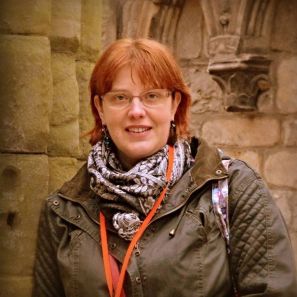
JenniferCWilson-HolyroodPalace


About Jennifer

Jennifer is a marine biologist by training, who spent much of her childhood stalking Mary, Queen of Scots (initially accidentally, but then with intention). She completed her BSc and MSc at the University of Hull, and has worked as a marine environmental consulting since graduating. Enrolling on an adult education workshop on her return to the north-east reignited Jennifer’s pastime of creative writing, and she has been filling notebooks ever since. In 2014, Jennifer won the Story Tyne short story competition, and also continues to develop her poetic voice, reading at a number of events, and with several pieces available online. She is also part of The Next Page, running workshops and other literary events in North Tyneside, including the prize-winning North Tyneside Writers’ Circle.

Jennifer’s debut novel, Kindred Spirits: Tower of London, was released by Crooked Cat Books in October 2015, with Kindred Spirits: Royal Mile following in June 2017. She can be found online at her website, on Twitter and Facebook, as well as at The Next Page’s website. Her timeslip historical romance, The Last Plantagenet? Is available for download from Amazon.


Meet the Publisher – Crooked Cat Books

2017 has been a great year in may ways for me – one of the reasons for that was finally finding a publisher for my novel Purgatory Hotel. After publication I have had the great fortune to come into contact with a great many writers who I have been busy chatting to about their own books which has been an amazing experience.

In a bonus interview I was able to get an audience with the mysterious Crooked Cat. In a rather surreal turn – the publishing house known as Crooked Cat Books agreed to an interview. But it turns out that the reason I am now a published author is because of an actual cat. A talking one….


Welcome to my blog!


Thanks so much for inviting me. And may I say what lovely wallpaper you have here. Not sure about the lampshade though.


 The lampshade? Its not from Ikea…is that a problem?

Who are Crooked Cat Books?


I are Crooked Cat Books and I are six years old. I’m based in France, but I used to live in Great Britain, and I’m a Cat, albeit a bit Crooked. I have around 220 books to my name (well, I didn’t write them), and about 90 authors. And I have rather a following across social media.


What inspired you to start an independent publishers?


I wanted to give really good storytellers an opportunity to have their voice heard, and being independent helps that. I’ve seen lots of stunning stories over the years and am proud that these are now being read by hundreds of thousands of people across the world. I embrace two things – that authors are the best people to talk about and promote their books, and that they sometimes feel they just want to hear it – to get advice – from other authors.


What is your favourite genre to read?


I love a bit of crime, me, though there are days when something chick-litty doesn’t go amiss. Having said that, we all like a bit of fantasy, don’t we? Oooh – I’m not sure I have a favourite.


Do you have a favourite author?


Always the next one I meet!


Crooked Cat has a variety of genres in its catalogue, what is it that you look for in a story that hooks you?


A really interesting and engaging person writer behind it. Knowing the story is only half of…er…the story, and we’re not only looking for a great hook, well-written, but someone that is a bit of a self-starter, confidence in engaging with their readers, willing to learn and share. If this isn’t you, you’re not going to do well as a published author these days.


What do you do when you aren’t publishing books?


I eat. I sleep. I chase mice and things.


If you could have a night of drinks and literary discussion with any writers (alive or dead) who would you choose?


Evelyn Waugh and David Hasselhoff, authors of Brideshead Revisited and Making Waves: The David Hasselhoff Autobiography, respectively.

Many thanks to you for chatting with me, and agreeing to appear on my blog, I hope you have enjoyed it as much as I have.

That is my pleasure. I’m sorry about your lampshade.


You can enter the world of Crooked Cat Books and its cattery of authors here;

Crooked Cat Books Website

Facebook


Behind the Book – Winter Writerland

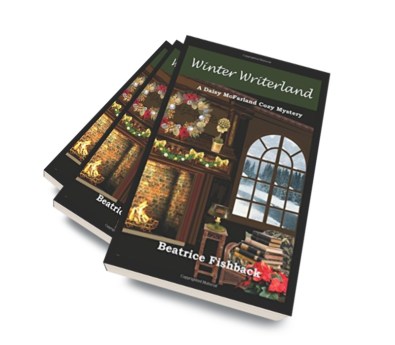
Winter WQriterland coverBeatrice


Continuing my conversations with authors and the inspirations behind their work, I had the great pleasure of chatting with Beatrice Fishback. Beatrice hails from New York and lived for 20 years in the UK where she picked up a love of all things British. She now lives in Carolina but still uses the UK as a setting for her work. Her most recent novel Winter Writerland takes place here so I decided to pick her brains on the subject matter.

This is also a perfect choice for something to read over the Christmas holidays – as long as you don’t mind a spot of murder with your mince pies…..


Tell us the basic premise of your novel?

Daisy McFarland is an American spinster who has retired to England after teaching elementary school for thirty years. An aspiring novelist, Daisy looks forward to attending the Crime Writer’s Conference in Branick for the third year in a row during the Christmas holidays. What she doesn’t anticipate is finding a body floating in the frozen lake and who could have possibly committed this dastardly deed.


The story features a murder at a writers Conference -Did you take any inspiration from any real life crimes? 

I can’t say I took any inspiration from a real life crime but I love to watch Midsomer Murders, Lewis and a selection of other U.K. dramas. In fact, I’m hooked on all of them to include Father Brown.


Why did you choose the setting you chose and do the locations hold any real life significance to you?

Last summer I attended the Swanwick Summer Writing School. There I met some wonderful new friends. Chatting over a glass of bubbly we thought the place was the perfect Agatha Christie setting for a cosy. We began to brainstorm and by the time I left the conference I had the skeleton idea for this tale.


Is your sleuth Daisy based on anyone?

I seem drawn to writing about mid-life women. Maybe because when I began my writing career I was approaching this season of life. My character in “Dying to Eat at the Pub,” another cosy mystery, is also about a woman who now faces life married to a retired man and she’s anything but ready to sit in front of warm fire and die in her recliner.


What/who inspires you most as a writer?

When I read stories that bring fiction alive, I’m inspired to give writing another try in the hopes that the next attempt will be that much better than the last. I especially enjoy Alan Bradley’s series about a much younger sleuth named Flavia de Luce. I love his attention to detail and descriptive settings.


Do you have a favourite author? Besides Alan Bradley, I enjoy Sir Arthur Conan Doyle and never tire of his Sherlock character.


What are you working on next? My challenge is whether to start another novel, or finish the one that’s nearly completed. I love beginning a new story with fresh characters. But I have half of the sequel to “Dying to Eat at the Pub” and I’d like to see that published in the New Year.


You can catch up with Beatrice here;

www.beasattitudes.net

www.facebook.com/Beasattitudes

And treat yourself to a copy of Winter Writerland for some cosy Christmas reading material;

Winter Writerland on Amazon

Behind The Book – Social Anxiety Revealed

Very excited with this week’s author chat as I got the chance to interview Miriam Drori – who actually was my editor on Purgatory Hotel. Herself an established writer, her most recent release was non-fiction looking at the subject of Social Anxiety. Mental health and the study of it has always been an interest of mine, and indeed features in my own work and life and I was very pleased that Miriam was willing to discuss the background to writing her book.

SAR Cover


Tell us the basic premise of your book?

Social Anxiety Revealed explains all the different aspects of social anxiety. It makes extensive use of quotes from many people who have experienced social anxiety and who agreed for me to use their words anonymously. This enabled me to show how, despite the similarities, we’re all individuals and that social anxiety affects each of us in different ways.

The book is intended for everyone – sufferers and non-sufferers, because everyone knows or will come across someone who has the condition.

The reviews call it a no-nonsense book that’s well-written and easy to read. I’m glad, because that’s how I meant it to be.


You have previously written fiction – what inspired you to move to this subject?

Ah, it only seems as if this is what I did. In fact, I wrote this book before any of the fiction. The book was inspired by two discoveries: that social anxiety is much more common than many people think, and that most people are unaware of its existence. I became passionate about putting this right by raising awareness of it. If more people knew and understood it, many more sufferers would get the help they need to tackle it.

After I tried and failed to get the book published, I turned my attention to writing fiction and eventually got a romance (Neither Here Nor There) accepted by Crooked Cat Books. That was followed by the historical novella, The Women Friends: Selina, the first in a series and co-written with Emma Rose Millar. When Crooked Cat began to publish non-fiction, I proposed my book about social anxiety and it was published, after being revised by me, in August 2017.


Were you inspired by any personal experiences?

Certainly, and some of those experiences appear in the book. I think it’s what makes this book unique. There are many self-help books that claim to show how to overcome social anxiety and are written by experts. Some of these have proved very helpful for some sufferers, while others have been unable to gain any benefit from them. I approach the topic from the other side of the patient/therapist divide and hence appeal to a wider audience.


How did you research for this subject?

For several years, I belonged to an online forum for social anxiety sufferers. All the topics in the book came up in discussions on the forum. One or two were topics I specifically raised on the forum so that I could include opinions on them in the book.


Do you have a favourite author?

That’s a hard question, as my favourite author changes frequently. I know I particularly like reading stories in which I (the reader) understand more than the narrator. Such stories include The Remains of the Day by Kazuo Ishiguro, The Curious Incident of the Dog in the Night-Time by Mark Haddon and Eleanor Oliphant is Completely Fine by Gail Honeyman.


Who would you most like to sit down to dinner with to discuss social anxiety?

My sixth form (years 12 and 13) teachers, who wrote on my school reports that I needed to change my behaviour, making me feel that I was to blame for my problems. I would explain to them, if they listened at all, that I wasn’t capable of changing all by myself at that stage in my life, and that they should have seen to it that I got help, although I expect that would have been asking for too much in the 1970s.


What are you working on next?

I’m back in the world of fiction, but still with social anxiety, as my main character suffers from it. He is overwhelmed, to say the least, when he finds himself on the way to Japan to try and sell a computer system. And that’s not all. Karaoke is also on the agenda!


Wow that sounds fun! Looking forward to reading Miriam’s next book – big thanks to her for letting me interview her.

You can follow Miriam on the links below, and get yourself a copy of Social Anxiety Revealed.

Miriam


Links

Social Anxiety Revealed                                The Women Friends: Selina         Neither Here Nor There

Miriam Drori can be found on Facebook, Twitter, Goodreads, Pinterest, Wattpad and on her website/blog and social anxiety blog.


Behind the Book – The Silence

The Silence


This week I was very fortunate to get to speak to Katharine Johnson, author of thriller The Silence. Ever since my early obsession with the Agatha Christie novel Sleeping Murder I have had an interest in stories about secrets and repressed memories, and this book fits that bill perfectly.

Naturally I wanted to get behind the book and find out where Katharine got her inspiration from for this dark tale.


Tell us the basic premise of your book?

Doctor Abby Fenton has a rewarding career, a loving family, an enviable lifestyle – and a secret that could destroy everything. When human remains are discovered in the grounds of an idyllic Tuscan holiday home she is forced to confront the memories she has suppressed until now and relive the summer she spent at the villa in 1992. A summer that ended in tragedy. The nearer she gets to the truth the closer she comes to losing her sanity. In order to hold onto the people she loves most, she must make sure they never discover what she did. But the reappearance of someone else from that summer threatens to blow her secret wide open


What made you choose the location of Tuscany and do the locations hold any significance for you personally.

I chose Tuscany because I love its multi-layered character. Beautiful locations often harbour a gruesome history. I wanted the backstory of The Silence to take place somewhere beautiful so that in Abby’s memory it would have a dreamlike quality, making it hard for her to decide if the events were real, and also somewhere hot so that as the temperature rises so do the tensions among the dysfunctional family she’s staying with.

I also felt that because many of these tiny mountain villages are so remote and the vegetation so fast-growing that it would be easy for a crime to remain hidden for many years. But with the trend for foreigners to restore old houses and turn them into holiday homes it was inevitable that the secret would be uncovered at some time.

Tuscany does have a personal significance for me. I’ve lived in Florence and have had a house near Lucca since 2003 where I wrote much of The Silence.


The book deals with secrets and the effects they can have on a person – did you find it difficult at all getting into the mind of your lead character?

The main character in my previous book was a 21 year old man with a violent temper living in the 1930s so by comparison writing Abby was a breeze! The thing about Abby is that because she’s very good at compartmentalising, her adult life is very normal – she could be any mum you see at the school gates and she has two little girls so I can relate to that. The dark secret obviously required imagination as my life is far less interesting but that’s what I love about writing – putting myself inside someone’s head and thinking, how would I deal with that situation?


What made you want to become a writer?

I’ve loved writing since childhood and wrote my first book aged nine about the adventures of a naughty chimp, probably influenced by Paddington stories which I loved. I’ve written for a living all my adult life but mostly as a magazine journalist. I’ve written about yachts, planes and automobiles but my favourite subject is houses. I’ve visited so many intriguing places with stories to tell although often these stories couldn’t be included in the feature, including a house that was haunted by Katherine, wife of John of Gaunt, one where a horrific suicide took place and one which the police interviewed me about because they were investigating the owner.


Do you have a favourite author?

So many! Overall it would have to be Barbara Vine. I love the way most of her characters are people on the outside of things and much more interesting than they appear


Who would you most like to sit down to dinner with to talk about books and solving crimes?

Patricia Highsmith – she could really get into the mind of a criminal


What are you working on next?

I’m really excited that my next novel The Secret will be published by Crooked Cat Books in 2018. Like The Silence it is about a secret harboured by Villa Leonida in the fictional mountain village of Santa Zita but this secret goes back to wartime. It’s about two girls growing up in Mussolini’s Italy. Their paths diverge after one of them marries into the family living in Villa Leonida where she discovers nothing is as she imagined, leading to a secret which has devastating consequences


Well I am loving reading The Silence so I cant wait for the next book Katy! Thanks for chatting with me, look forward to another chat about your journey back to the sinister Villa Leonida……


Katharine Johnson

Grab a copy of The Silence here;

http://mybook.to/TheSilence


You can keep up with Katy by following the links below!

https://katyjohnsonblog.wordpress.com/

https://www.facebook.com/Katharinejohnsonauthor/?ref=bookmarks

http://www.twitter.com/kjohnsonwrites

Newsletter http://eepurl.com/cy3CEn


Behind the Book : The House at Ladywell

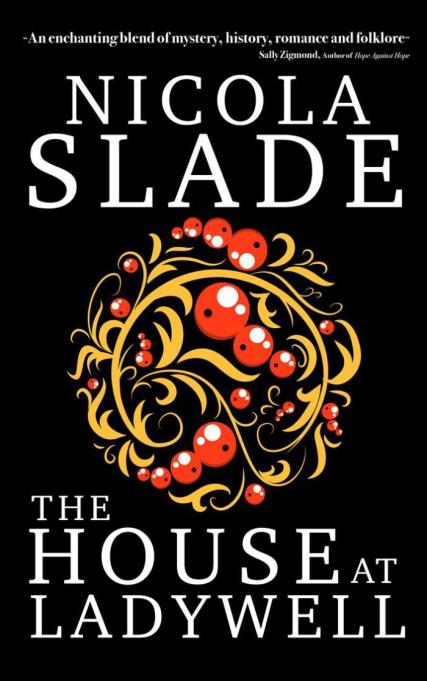
ladywellfinalcover

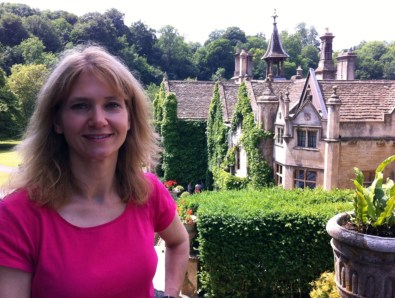
Continuing my look at authors and the inspiration behind their books – this week I was lucky enough to talk to Nicola Slade about her new book. There’s a touch of the Nicola Slade Picparanormal at work here and along with a historical mystery, I had to get involved and ask more about the background.
 

Tell us the basic premise of your novel?

Freya Gibson, PA to Patrick Underwood, a best-selling novelist, inherits an old, run-down house from an unknown elderly relative. She falls in love with the house but waiting for her is an enigmatic letter from Violet, the elderly cousin, telling her that she must ‘restore the balance’ of the house, beginning by reciting a Latin verse. Freya does so, while wondering whether it’s a prayer or a spell.

She learns that Ladywell was known as a place of healing and the house begins to work its magic on her as she discovers family secrets that shake her foundations.

Woven into Freya’s contemporary story are echoes of the family through the ages and although the reader learns why things happened as they did in the past, Freya is unaware of the house’s history.


What or who inspired you to become a writer?

My mother and grandmother were great readers and meals were always quiet as we all ate and read at the same time! I realised when I was very young that books came out of people’s heads and knew that was what I wanted to do.


Are your locations based on a real place? and do the locations hold any real life significance to you?

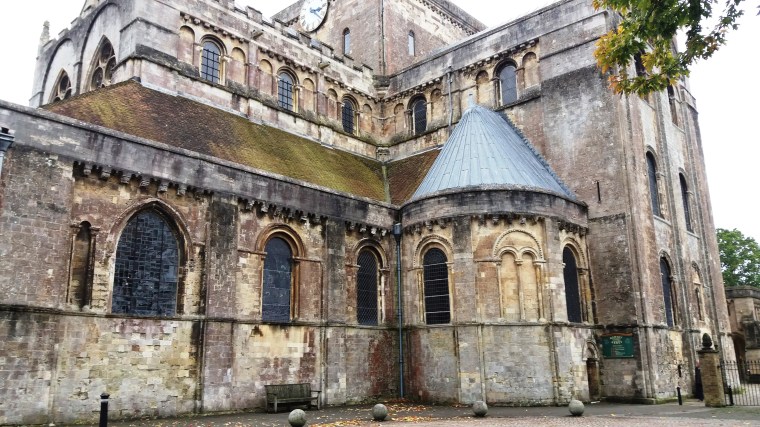
In this book my fictitious town of Ramalley is based on Romsey, in Hampshire, a bustling market town between Winchester and Southampton and about five miles from where I live, so it’s a place I visit frequently. When I was small I used to visit an aunt who lived not far from the town and I’ve always loved it so I was delighted when we moved to Hampshire back in the 80s.


Did it take a lot of research for your locations and the historical aspect of the story line?

I’m passionate about history so I mostly enlarged on historical events that fascinate me and I had a lot of fun reading up on them. The Lady’s Well – part of the history of the house – was  inspired by the font at Mottisfont Abbey, a National Trust property not far away and I had a couple of interesting day trips to check out the Chalice Well at Glastonbury and the Wishing Well at Upwey in Dorset. I blogged about it here .

20171024_152236


There’s a supernatural feel to the story, do you believe in ghosts?

I’d like to! But I’m not sure though I do think some places have a distinct atmosphere. It’s not a spoiler to say that some people can smell flowers in The House at Ladywell even where there’s not a petal in the place!

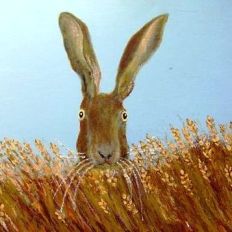
OLYMPUS DIGITAL CAMERAThe House at Ladywell has legends about hares all through the book – partly because, like so many people, I find hares magical.


What is your favourite genre to read and to write?

I love historical mysteries and have written a cosy mystery series, The Charlotte Richmond Mysteries, set in the 1850s. I don’t like to read anything too gritty or gory and I do like a happy ending!


 What are you working on next?

I’ve written the first draft of a cosy mystery set in 1918, actually in the same fictitious town of Ramalley as The House at Ladywell and I’m about to start on the serious revisions.

‘Three sisters struggle to keep the home fires burning but are hampered by wartime shortages, lack of money, demanding lodgers and a difficult mother. As though this isn’t enough, there’s a rumour that their late, unlamented father may not be dead after all and their lives are further inconvenienced by murder!’


Buy your copy of The House at Ladywell here


Facebook Author Page https://www.facebook.com/nicolasladeuk/

Twitter  @nicolasladeuk

Website www.nicolaslade.com

Blog  www.nicolaslade.wordpress.com

Email  Nicola.slade@virgin.net

Pinterest https://www.pinterest.co.uk/nicola8703/the-house-at-ladywell/