Behind the Book : The House at Ladywell

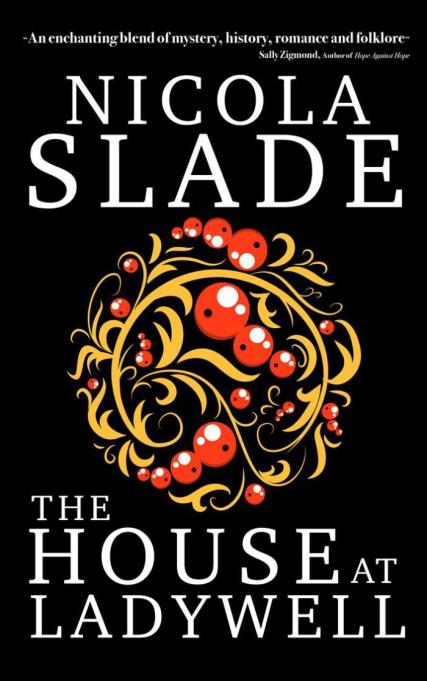
ladywellfinalcover

Continuing my look at authors and the inspiration behind their books – this week I was lucky enough to talk to Nicola Slade about her new book. There’s a touch of the Nicola Slade Picparanormal at work here and along with a historical mystery, I had to get involved and ask more about the background.


Tell us the basic premise of your novel?

Freya Gibson, PA to Patrick Underwood, a best-selling novelist, inherits an old, run-down house from an unknown elderly relative. She falls in love with the house but waiting for her is an enigmatic letter from Violet, the elderly cousin, telling her that she must ‘restore the balance’ of the house, beginning by reciting a Latin verse. Freya does so, while wondering whether it’s a prayer or a spell.

She learns that Ladywell was known as a place of healing and the house begins to work its magic on her as she discovers family secrets that shake her foundations.

Woven into Freya’s contemporary story are echoes of the family through the ages and although the reader learns why things happened as they did in the past, Freya is unaware of the house’s history.


What or who inspired you to become a writer?

My mother and grandmother were great readers and meals were always quiet as we all ate and read at the same time! I realised when I was very young that books came out of people’s heads and knew that was what I wanted to do.


Are your locations based on a real place? and do the locations hold any real life significance to you?

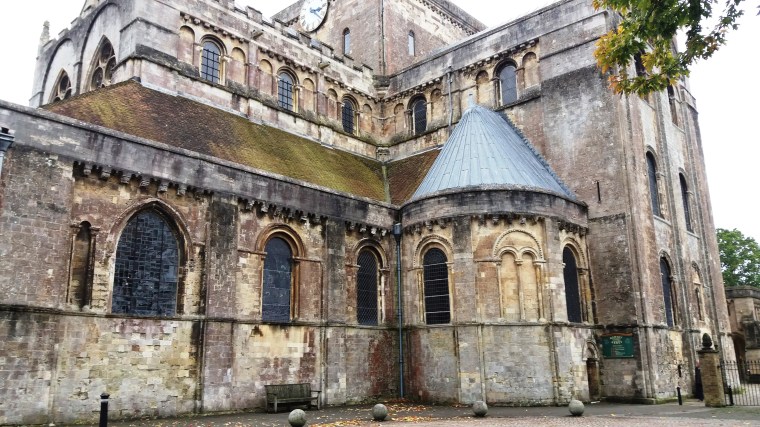
In this book my fictitious town of Ramalley is based on Romsey, in Hampshire, a bustling market town between Winchester and Southampton and about five miles from where I live, so it’s a place I visit frequently. When I was small I used to visit an aunt who lived not far from the town and I’ve always loved it so I was delighted when we moved to Hampshire back in the 80s.


Did it take a lot of research for your locations and the historical aspect of the story line?

I’m passionate about history so I mostly enlarged on historical events that fascinate me and I had a lot of fun reading up on them. The Lady’s Well – part of the history of the house – was  inspired by the font at Mottisfont Abbey, a National Trust property not far away and I had a couple of interesting day trips to check out the Chalice Well at Glastonbury and the Wishing Well at Upwey in Dorset. I blogged about it here .
20171024_152236


There’s a supernatural feel to the story, do you believe in ghosts?

I’d like to! But I’m not sure though I do think some places have a distinct atmosphere. It’s not a spoiler to say that some people can smell flowers in The House at Ladywell even where there’s not a petal in the place!
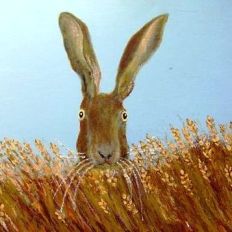
OLYMPUS DIGITAL CAMERAThe House at Ladywell has legends about hares all through the book – partly because, like so many people, I find hares magical.


What is your favourite genre to read and to write?

I love historical mysteries and have written a cosy mystery series, The Charlotte Richmond Mysteries, set in the 1850s. I don’t like to read anything too gritty or gory and I do like a happy ending!


 What are you working on next?

I’ve written the first draft of a cosy mystery set in 1918, actually in the same fictitious town of Ramalley as The House at Ladywell and I’m about to start on the serious revisions.

‘Three sisters struggle to keep the home fires burning but are hampered by wartime shortages, lack of money, demanding lodgers and a difficult mother. As though this isn’t enough, there’s a rumour that their late, unlamented father may not be dead after all and their lives are further inconvenienced by murder!’


Buy your copy of The House at Ladywell here


Facebook Author Page https://www.facebook.com/nicolasladeuk/

Twitter  @nicolasladeuk

Website www.nicolaslade.com

Blog  www.nicolaslade.wordpress.com

Email  Nicola.slade@virgin.net

Pinterest https://www.pinterest.co.uk/nicola8703/the-house-at-ladywell/


Behind the Book: Barnabas Tew and the Case of the Missing Scarab


cover-small

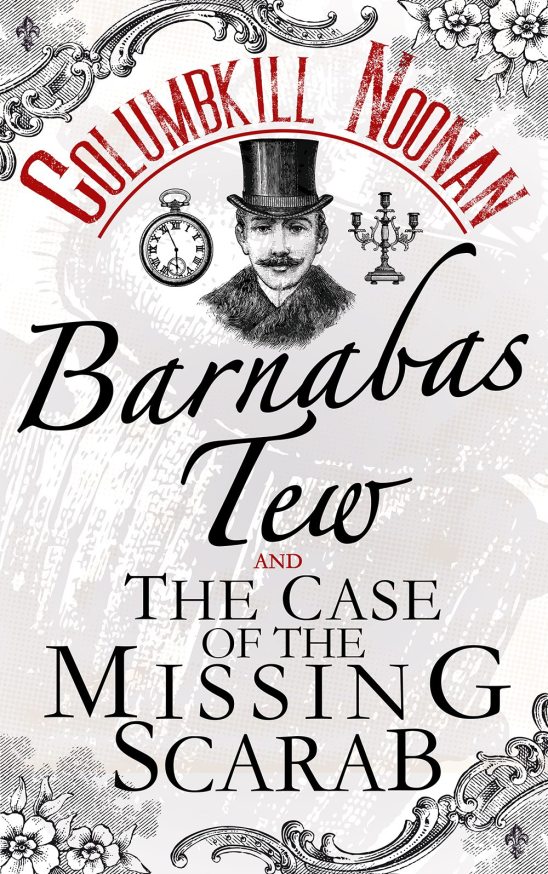
This book has several elements that drew me in – firstly its set in my home town of London, which is always a plus. Add to that its set in Victorian London, which is even cooler. Then add a Private Detective and Egyptology and there you have the recipe for a brilliant adventure novel! And of course – there being a whole trip to ‘The Land of the Dead’ thing set this firmly on my radar.

The author Columbkill Noonan hails from beautiful Maryland, USA, so I was very excited when she agreed to have a long distance chat with me about her book.Columbkill Noonan


Tell us the basic premise of your novel?


Barnabas Tew is a somewhat neurotic, extremely anxious, and rather particular sort of person. He also happens to be a somewhat sub-standard private detective. Through luck (or misfortune, depending on your perspective!) he is whisked off to the Egyptian afterlife to solve a case for Anubis, the Egyptian god of the dead. Things just keep going wrong from there…


Why did you choose Victorian London and do the locations hold any real life significance to you?


I love historical fiction, and I love London, and everything that is quintessentially British. I’m also fascinated with ancient mythologies, so I figured I’d marry the two.


Did it take a lot of research for your locations and story line?


It did! I spent a lot of time researching the Egyptian gods and goddesses. But I think researching is fun, so it wasn’t really like work at all for me.


If you could have a few drinks and an evening of conversation about the afterlife with any 3 famous figures (alive or dead) who would you pick? 


Eleanor of Aquitane, for one. Was she really as much of a pip as history makes her out to be? If so, then I want to hang out with her for sure. Cleopatra, for pretty much the same reasons. And lastly…Genghis Khan. Was he so warlike out of a need to preserve and protect his people from invasions? Or was he just kind of a jerk? I need to  know…


Do you believe in an afterlife? What do you think it would be like?


I do believe in an afterlife, and I rather hope that it’s not like the ancient Egyptian idea! I tend to think of it in terms of the Buddhist or Hindu theology, where a person would be reborn until they figure things out and then they can get off the merry-go-round, so to speak. Heaven sounds pretty nice, though. It would be great if that’s how it was. I guess I’ll find out…someday!


What are you working on next?


The sequel to “Barnabas Tew and the Case of the Missing Scarab”, of course! Can’t just leave him hanging. He and Wilfred are off to the Viking afterlife, and they are really in way over their heads this time.


‘Barnabas Tew and the Case of the Missing Scarab’ is published by Crooked Cat Books available in paperback and Kindle.

 Buy the book from Amazon.com

Buy the book from Amazon.co.uk


Connect with Columbkill Noonan for news about her next book;

Visit Columbkill’s Website

Facebook

Twitter


Behind the Book ; The Wood Collecting Stag

Books have been a part of my life since I was a child, my parents encouraged me to read from a very young age and it stuck.

Now I have a child myself I found that I have done the same with her, from the fabric books she used to chew as a new baby to the big colourful storybooks she now loves.

So these days I find myself reading as much adult books as I do ‘Meg and Mog’ and ‘The Gruffalo.’

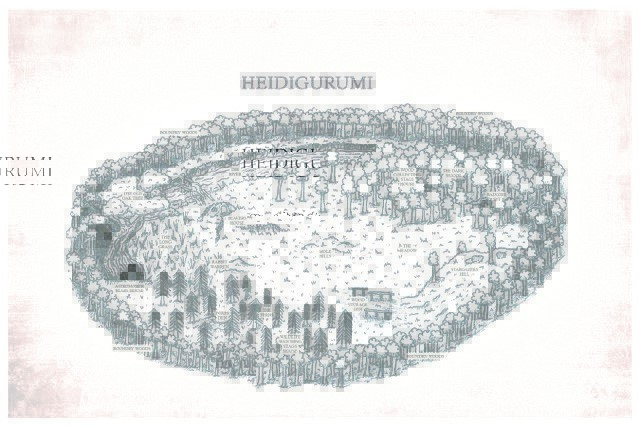
For that reason I thought it would make sense to speak to children’s book author – another world from what I write myself. As strange fate would have it – within weeks of my own book being published, a dear old school friend Hannah Murray, found herself published too. Her book The Wood Collecting Stag is a collection of 6 children’s stories, perfect for ages 3 and up, was based on characters he had created in her craft shop with wool and yarn. So I had a chat with her about how she created the world of Heidigurumi.


Tell us the basic premise of your book?


I’ve always had the stories of the characters in my shop. In my head. I usually am thinking about their personalities and ‘jobs’ when I’m actually making them. My Dad encouraged me to write the stories down. I’ve not had time before (I don’t have time now!!) But I knew I wasn’t getting any younger and I have a vision for Heidigurumi. One I want to leave as a legacy for my children. It’s up to me to try and bring that vision to a reality.  I felt the time had come to really put my all into it and try to pull it all together. Books was the next step. Though it was a much bigger step than I anticipated. 1am finishes coupled with 5am starts over the last 2 months have taken their toll on me!


What inspired you to write the book?


Lots of things. But mainly I long for little children to hear the stories I have in my head, to fall asleep thinking of these funny characters going about their business. Just as we do with all our books as kids. The biggest inspiration for me author-wise would be Enid Blyton. I practically read everything by her as a child. The Faraway Tree, The Enchanted Forest, and as I got older, Famous Five, Secret Seven. All these books took me to exciting places.


Have you always wanted to write children’s fiction? Have you written in any other genre’s?


I’m quite childlike minded!! I give voices to animals whenever I see one (even dogs in the street!) My children think I’m bonkers. So in a word, no. I would not contemplate writing a different genre. I have too much stored up in my head to share with children for there to be room for anything else.


You also run an Etsy shop called Heidigurumi, what can you tell me about what you make and sell?


I opened Heidigurumi in November 2009. It’s evolved through the years really. The things I sell are woodland related. I make needle felted characters (a process of sculpting raw unspun wool into solid structures using a single barbed needle). These characters are usually one offs. They can take between a few evenings to a few weeks to make. They also have a character card with them. There is a hand drawn watercolour postcard with all their individual details on. I take custom orders too. As my collection of characters grew, so did the imaginary World they lived in in my head, Heidigurumi became the actual woodland they all lived in alongside each other. Which brought me onto the books I suppose.


I make other bits and pieces, like little crochet birds in hanging nests. They are quite funny. Just all handmade items I make during winter evenings! I’m not a ‘goer outerer’ at all. I’m home every single night. Making things. In fact I’ve had three evenings out in the last three years!

Heidigurumi


What are you working on next?


Next in the pipeline is a book for another character in my shop. Stargazing Badger. He is hilarious. An old badger that spends a lot of time on Stargazer Hill (see map above) he has a notebook he draws the constellations in. He has stories to be told and they are ready, though they are not on paper yet! I’m hoping to have this out by Christmas. It’s the illustrations that take more of the time. Wood Collecting Stag had over 70 hand drawn, watercolour painted pictures (which you can’t see in the paperback but they are all colour painted) and that took forever!! So it’s a daunting prospect to do similar before Christmas for S.Badger. But I’m better under pressure. All the children out there are my motivation.


Buy ‘The Wood Collecting Stag’ on Amazon 

 Heidigurumi Shop on Etsy

Heidigurumi on Instagram

Heidigurumi on Facebook

All Characters and Images ©2009-2017 Hannah L Murray


Behind the Book – ‘Oh! What A Pavlova’ by Isabella May


IMG_3235I recently had the good fortune to have a chat with author Isabella May about my book Purgatory Hotel. While we were talking I managed to ask a few questions of the lady herself as her new book held an interest for me.

Despite the light-hearted name and appearance of  the book, its subject matter of domestic violence is a darker element that has been misrepresented so many times in the past. I was eager to see how she handles it. Plus there’s cake so, you know……


Tell us the basic premise of your novel

It’s a tricky one to condense down into an Elevator Pitch… but here goes:

One woman’s bid to flee her abusive relationship amidst the lure of cake, travel, many an unsuitable man, and the whispering of Glastonbury’s ley lines.


Did you take any inspiration for your story from real life?

I think it’s impossible for reality and fiction NOT to cross at some point. Whilst Kate’s story is fabricated, I have been through Domestic Violence myself, and I had a burning desire to dispel some of the myths that surround it. In particular, the misconception that only the uneducated and working class fall prey to abuse. DV does not discriminate! I also wanted to shine a light on the increasing phenomenon of the victim living two very different lives: one ‘for the cameras’ – ie. friends/family/the office… and the other, the very much darker existence that plays out when the curtains are drawn, the front door locked.


What do you think is the most accurate depiction of domestic violence on film or in a book? 

I have yet to come across anything that accurately sums it up in its entirety, and I honestly think that’s because it is virtually impossible to do so. The one thing I have learned is that domestic violence doesn’t discriminate or pigeonhole. No two experiences are ever the same and the contrast from victim to victim is vast, all of which only highlights the need for open-mindedness. My own novel is in no way representative of the average domestic violence experience either. It’s just Kate’s story, but it does serve to life the lid on that all too common assumption: only the uneducated are abused.


What do you think the biggest, most represented myths around domestic violence are? 

1: It can only happen to women. Many men are also affected.

2: That it is reserved for those who are poor, uneducated and working class. Anybody from any walk of life can find themselves in this situation.

3: That physical abuse happens on a daily basis. In Kate’s situation (in many situations) it doesn’t. The emotional abuse tends to play out as a daily ritual to grind the victim down. But the physical side of things can be sporadic, often with no ETA, taking the abused by complete surprise when they have let their guard down.
Onto a lighter subject…..Cake is a big theme in the book, what’s your favourite cake?

If I was really pushed to choose, then the classic Victoria Sponge. It’s so hard to beat, especially with fresh whipped cream and a cuppa to cut through it all. But I adore most cake (with the exception of anything from a Clean Eating recipe… or containing chunks of stem ginger!)


Why did you choose the setting you chose, and do the locations hold any real life significance to you?

I had long felt (and still do!) that Glastonbury is under-represented in mainstream fiction. It was high time it took centre stage. As for the other locations, many of them I have visited, and as I adore travel, it was a great way for me to pay homage to some fabulous international cities… and their cake!


Did it take a lot of research for your locations and story line?
I had to jog my memory as to some of the sights, sounds and smells. Pinterest made the perfect place to do that… as well as get sidetracked by its millions of hygge-esque pictures.


I’m intrigued by the mention of Glastonbury ley lines in the synopsis… can you tell me anything about the role they play?

The ley lines are a metaphor really for all of the spiritual signs that Kate collates throughout the story. They get louder and louder as the plot develops. But will she act on their advice? Or will fear and procrastination have its way?


What are you working on next?

My second novel is called The Cocktail Bar. Once again, it is set in Glastonbury and it will be published on 13th February 2018. Here’s a bit of blurb:


Rock star, River Jackson is back in his hometown of Glastonbury to open a cocktail bar… and the locals aren’t impressed.Seductress Georgina is proving too hot to handle, band mate Angelic Alice is messing with his heart and his head, his mum is a hippie-dippy liability, his school friends have resorted to violence – oh, and his band manager, Lennie AND the media are on his trail.But River is armed with a magical Mexican elixir which will change the lives of the Three Chosen Ones. Once the Mexican wave of joy takes a hold of the town, he’s glad he didn’t lose his proverbial bottle.

Pity he hasn’t taken better care of the real one…

download

You can get a copy of the book here; Oh! What A Pavlova – in paperback and on Kindle

You can follow Isabella May on her website and social media here:

www.isabellamayauthor.com

 Twitter – Isabella May

Facebook

Instagram – @isabella_may_author


Behind the Book : The Watcher

Having at last found a publisher for one of my own books, I have had the good fortune to find myself in the company of a bunch of great writers lately. Its great to be part of a community of writers sharing ideas and general chat. Its also a great way of finding new books to read!

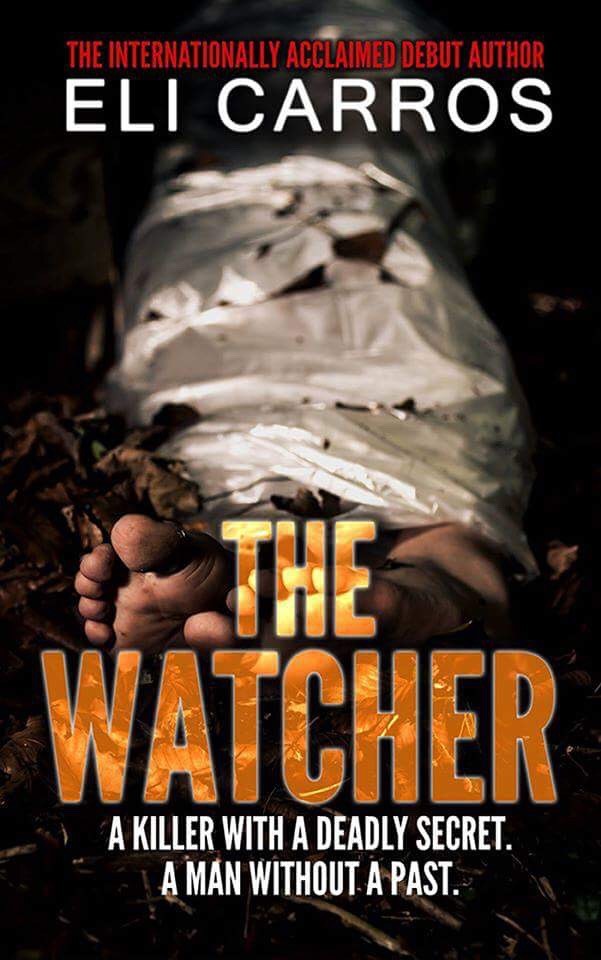
One of the novels coming out this year is right up my street ; a serial killer on the loose in London with a detective hot on his trail. The Watcher, the debut novel of Eli Carros is being released by Crooked Cat Publishing on 21st June.

Being a bit of a true crime nut and crime fiction fan and always excited by any London based books, I thought I’d have chat with the author to find out more about what inspired him.


Tell us the basic premise of your novel?

The Watcher is about an obsessive serial killer who stalks his victims before violently attacking them.  It takes readers into the mind of a true psychopath, exploring what makes him tick and learning how he became who he became.  It’s a novel about alienation, prejudice, abuse, and shame and how formative life experience can tip the balance of an unstable mind.  It also takes readers behind the eyes of DI Jack Grayson, who’s been tasked with the unenviable job of stopping a brutal killer who leaves no trace before he strikes again.


Did you take any inspiration for your serial killer from any real life crimes? 

The lead antagonist in my novel is a composite character, incorporating traits from real life serial killers I studied and also some fictional and screen creations.  Before writing, I made case studies of several serials, including Ted Bundy and the Green River Killer, and I did draw on certain commonalities that I found.  Though the actual character I have created has his own, very distinct, and possibly fairly unique motivations for doing what he does.

I’m also an avid crime fiction reader, and a big fan of the novels of the late Ruth Rendell, as well as crime queen Patricia Cornwell, and the books of Mark Billingham, Val Mcdermid, and Leigh Russell, among others.   No doubt I have been influenced to some degree by what I’ve read from those amazing authors.


Why did you choose London as a setting and do the locations hold any real life significance to you?

I lived and worked in London for seven years, and also studied journalism there.  I love the hum and throb of the place, as well as the tolerance and culture, and it definitely feels like my spiritual home.  I don’t live there currently but I want to, and, as soon as I can afford to, I’m moving back there for sure.


Are you a Londoner or did it take a lot of research for your locations?

As I was a Londoner for seven years, while I was there I was able to go to some amazing and very atmospheric locations.  The Watcher was actually written while I still lived in London, in fact, one scene of the book in actually set in a café in Old Compton Street that I was writing the book in at the time, though I don’t name the place in my novel.  I can tell you now though, it’s Patisserie Valerie, a lovely place where I’ve spend many a wonderful afternoon, people watching.


Crooked Cat are an independent publisher, what can you say about your experience with them so far? 

I admire independent publishers like Crooked Cat for the high standards and professionalism in a market that is orientated towards big business.  I also think the authors they have in their stable are absolutely amazing, I’ve read some of their talented writers already and am steadily working my way through the rest.


Can we expect more from Chief Inspector Jack Grayson?

I think Grayson will be making a comeback soon, as I’m in the planning stages for my second crime thriller at the moment.  This one’s about a very different killer than the one featured in The Watcher, because this one actually wants to stop.  The second novel will cover themes of virtual reality and autism, and will contain lots of surprises and twists because I do think those are the some of the best things about reading crime fiction.


The Watcher’s officially released on June 21st by Crooked Cat Books and is available in e-book and paperback from getbook.at/thewatcher.  Readers can stay updated on The Watcher and receive news of bonus content, exclusive competitions, and the online launch party by visiting the facebook page at https://facebook.com/elicarros or Eli’s website at http://www.elicarros.com

eli

Smells Like Teen Spirit – Being a Teenager in the 90’s

So many 90’s anniversaries going on, it felt right to re blog this 🙂

Anne-Marie Ormsby's avatarAnne-Marie Ormsby

I’m pretty sure that every decade has its own guidelines to growing up. Being a teenager in the 80’s must have been very different to being a teenager in the 90’s. But what about it was different, was it just the clothes and music? Or is every teen the same no matter what the decade.

I don’t know but i was a teenager in the 90’s. In 1990 I turned 12 and developed an obsession with Twin Peaks. It was a weird start to my teen life but it shaped me in ways I couldn’t see at the time. I was able to embrace my love of the weird. David Lynch and his strange camera angles and beautiful 50’s femme fatales were pure poetry to me and still are to this day. However its fair to say that accepting the weirdness of yourself does not signal an easy start to…

View original post 872 more words

One Weekend in London

There is never any shortage of things to do in London, hundreds of art galleries and museums all over town showing their collections 7 days a week all year round.

There are also events that visit London for a short time, a brief fling with the city that exists for only a few months. Last weekend I managed to fit in three such events.

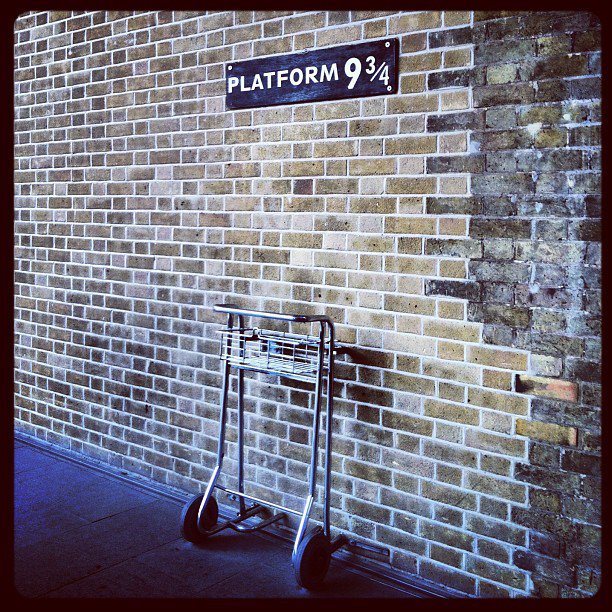
Late morning on Saturday saw me and Mr O take the northern line up to Kings Cross where I was happy to see the old world of seedy grimness gone and replaced with new shops and trendy bars and restaurants. Only 3 years ago I passed through there every day and knew the area like the back of my hand, but like the rest of the city, it is forever changing and improving, leading me to realise if you take a long enough break from any part of London, by the time you go back it will feel like a different place. I also managed to get a picture of Harry Potter’s Platform 9 ¾ and have a look at the new St Pancras Hotel which looks amazing albeit well out of my price range.Image

Anyway I hadn’t gone up there to see the train station, I was up there to visit the British Library, and see something that has never been in London before. I am a huge fan of American writer Jack Kerouac; a school friend bought me ‘On The Road’ for my 15th birthday and that was the beginning of a love affair with a form of literature I had been unaware of up to that point. I had read the classics, fallen in love with Heathcliff a dozen times over reading Wuthering Heights, read random books of Russian literature after discovering Vladimir Nabokov, delved into the darkness of Thomas Mann and Franz Kafka and had touched the edges of Americana by reading ‘The Catcher in The Rye’ too many times. Kerouac was a whole new world for me, open roads, open lives and the style of his writing was so free and clear that I got sucked into it, reading as many of his books as I could lay my hands on, depending entirely on my local library and second hand bookshops. Ahh…memories of days before Amazon when it was all about actually leaving the house to hunt down books.

‘On The Road’ is not my favourite novel by Kerouac, but it was my first so when I saw that the British Library was going to be home to the original scroll of the novel I knew I would have to go and see it. As you may already know, Kerouac wrote the book in 3 weeks typed on one 120 foot scroll of paper made of rolls of tracing paper that he had sellotaped together so he wouldn’t have to interrupt his creative flow by stopping and putting in new sheets of paper. The book that was published is an edited version of this original scroll, but the entire text is now available in book form.

Image

I can’t explain, nor will I try to justify why this was a magical experience for me. It was my equivalent of going to a concert or festival; this was as close as I will ever get to my literary idol, as though he was there in the distance on a stage, an indistinct form but him all the same, his presence in the room as real as it could be. I said to Mr O afterwards that I was grateful that he had come along, as he doesn’t have the same passion for Kerouac as I do, I had basically dragged him from one end of London to the other to look at an old yellow roll of paper.

After this we made our way south again to central London and the National Portrait Gallery where a free exhibition of photo’s and magazines of Marilyn Monroe are on show. ‘Marilyn Monroe; A British Love Affair’ is a nod towards the time she spent in the UK filming ‘The Prince and The Showgirl’ with Laurence Olivier. This era of her life having renewed interest following the movie ‘My Week With Marilyn’ which covers the same period of her life. A small but beautiful collection of photo’s by some of Britain’s greatest photographers of the time including some of my favourites by Cecil Beaton. They also have a lovely collection of rare British magazines with Miss Monroe on the cover.

Sunday night covered another of my favourite things; burlesque. And in particular what I have always Imageconsidered the best burlesque, the Crazy Horse. The famous Parisian revue has had shows all over the world, I first saw them when I was in Las Vegas in 2006, but was very glad to discover they were coming to London with the new Forever Crazy, a collection of the most popular acts from the last 60 years. What sets them apart from other revues is that the individual acts themselves are very simple – it is the lighting effects that make them so spectacular. If you want to see what it’s all about before forking out for the live show, check out the documentary movie ‘Crazy Horse’ made last year to show what goes on backstage and onstage at the famous original Paris venue just off the Champs Elysees.

I’d recommend the real thing though, as the London purpose built venue is quite amazing; a voluptuous velvet lined theatre with a bar area I wish was permanent – glittering chandeliers, kitsch fluorescent lights and a dressing room mirror themed bar. They also have a fabulous act (inbetween naked lady acts) called Up and Over it who literally and wordlessly tap, drum and slap their way through a re-enactment of a lovers quarrel. Entertainment all round and a damn good giggle, go get some.

Forever Crazy is at the Southbank Centre until December 2012

On The Road; Jack Kerouac’s Manuscript Scroll is at the British Library until 27th December 2012

Marilyn Monroe; A British Love Affair is on at the national Portrait Gallery until 24th March 2013

About London

There’s this idea that people should know the very moment when they fall in love, that for some reason there would be a moment, ‘stars would explode in the sky’ as Nick Cave put it. But they don’t, there is no epic firework display, the earth continues to turn and nobody else on earth knows it has happened. That’s why you forget the precise moment.

I don’t recall the moment I knew I was in love with London; I think it had built slowly over the years. But I feel it more clearly now, every morning when my bus turns out onto London bridge and suddenly the sides fall away, I am over the river and I can see the city laid out before me, Tower Bridge to my right, St Pauls to my left, and everything in-between and I catch a breath, my heart swells and I feel it. Love.

Image

I grew up out on the coast in south east Essex, an idyllic childhood of parks and playgrounds and trips to the beach after school. I used to walk home from school sometimes along the seafront, even in winter just to feel the biting air and feel alive again after a day of dusty brained learning and stuffy classrooms. I knew I was lucky to grow up there, 45 minutes train ride from London and blessed with fresh air and man-made beaches.

When I was younger, my parents used to take me to London once a year during the October half term holidays. It was so busy and lively and the shops sold things I didn’t see back home, bookshops there were palaces of literature laid out on several floors where I would lose whole afternoons in the poetry section.

I always longed to visit Whitechapel due to my interest in creepy tales of Jack the Ripper but it remained a mysterious tube station that we never got off at. As far as I was concerned it was all still dark alleys and Victorian street urchins up there.  As an older teenager I visited Camden with friends and felt at home in all the alternative shops and market stalls, although always slightly nervous of the enormity of it, days out would end with a tired scuttle back to Fenchurch Street and what felt like the longest train journey ever.

In my 20’s I visited a few more times, going to gigs mainly, staying over in hotels occasionally, but I still felt so removed from it all, like it was all behind glass and I was just there as visitor in a giant museum.

When I was 29 I went to Brick Lane for the first time and I loved it, shortly after some of my friends moved to Whitechapel so I started going up more regularly, finally getting off the tube at that mysterious station. The first time I went up on my own felt weird, I was going to places I had never been before and instead of that feeling of distance, I was starting to feel at home.

ImageThe day after my 30th birthday I went on a date with the man I eventually married. We met up at Fenchurch Street and spent the whole day walking around, along the Southbank and back into the city where we wandered down alleyways and found hidden churches, gargoyles and streets empty of life. He showed me a part of London I had never seen before. The City of London is a different place on a Sunday compared to the weekdays when people pour in and out of the skyscrapers and fill in all the gaps between the buildings. At the weekend all that remains is quiet corners, old buildings and new building living side by side quite peacefully, endless amounts of closed branches of Starbucks and Eat that have no purpose without the city workers that fill them during the week days.

I think maybe I fell in love twice that day. With the man I had just met and with the city I had just been shown.

I left my life by the coast and got a job in North London, soon after I moved to South London. I had never lived anywhere other than where I grew up but it felt right, like it was time for me to move on.

ImageI have lived in London for 4 years now, and I never ever get tired of it; my journey to work takes me from the foot of the Shard, past Southwark Cathedral, past Monument, up Bishopsgate, past the Gherkin and the Heron, through Shoreditch and to Hackney. Every morning I look out from the bus as though it’s all still new to me, it’s all still so beautiful to me.

At weekends we take long walks, to Brick Lane and Spitalfields, along the Southbank to Westminster or over to the back streets of Covent Garden and Soho. The difference for me now is that I don’t feel distant anymore, that I belong and I am part of it. Even though my awe still allows that feeling of visiting a giant museum, I feel now that instead of being behind glass I can touch the exhibits and even wander around back rooms not open to the public.

I take photographs incessantly like a day-tripper, I go to an endless supply of art and photography exhibitions, I wander back streets looking for street art and I say a prayer every time I have to brave Oxford Street. I know I won’t live here forever, for one reason or another I will end up by the coast again one day, so while I am here and its all on my doorstep I want to see as much as I can.

Image

This summer in London has been wonderful, the energy and excitement around the Olympics was inspiring; for all our pre-Olympic moaning about stupid mascots, transport and other problems we all got swept away by the ridiculously happy vibe that was created once we started winning gold medals. The transport system ran fine, people talked to each other, we hugged ugly Wenlock and Mandeville statues around town.

London fell in love with itself.

I have so much to say about London, but the rest can wait.


(All Photo’s Copyright of the author)

Anarchy in the UK

It has been a weird experience living in London during the riots. Whilst the scenes form Tottenham were shocking they felt somewhat remote for anyone outside that area. The day after I was barely aware of it but horrified to find out that it had all kicked off over a shooting.

It all became very real on the Monday when I was at home on a days holiday and found I was watching the street where I work awash with riot police and gangs of angry missile throwing youths. As in any time of disaster, my eyes were then glued to the TV. So glued in fact that I couldn’t see the fire billowing out on my own high street. The anger was spreading like a virus from a disaster movie.

I’ve lived in Peckham for 3 years now, and despite popular opinion, it’s not a massively dangerous place to live. You become desensitised to gang violence living in London, and 6 months ago when a kid got stabbed down the road from me it was awful, but somehow not a shock.

On the 8th of August I watched live coverage of a road that is 3 minutes from my house being charged by riot police, kids smashing up shops and stealing clothes. They even robbed a pound shop. I had friends updating me from Clapham saying the shop they lived above was being smashed up, while I watched the action on the TV. I saw the whole thing as it was being reported and even though by the time I went to bed at 1.30am, I was numb, I still had this feeling of unreality. Like it was all a movie and that at end the troops would sweep in and clear away the troublemakers.  Roll credits.

The next day when I went to work and my high street was smashed up and burnt out it was all real.

What had happened? What had gone on in the collective consciousness for those three nights of London riot ? It was like a disease had spread somehow, zombies roaming streets where cars and bin were ablaze and frightened residents ran away with packed bags, as though the virus might get them too. These hooded zombie monsters were roaming in packs, tearing through windows and pulling out the guts of shops, sloping off with trainers and mobile phones, breaking up anything they couldn’t carry.

But those zombies are the youth of London. The Kaiser Chief’s predicted a riot. And they were right. The signs were there all along, we just didn’t believe it could happen here. On a daily basis in London, thuggish teenagers cause trouble. It’s not an unusual sight to see a smashed shop front in Peckham or Hackney; it’s just the sign of a lively weekend. This is why most shops on Rye Lane have metal shutters, prevention is better than a cure.

But it is the cure that eludes us. The kids are not all right, the kids are angry, the kids feel let down. What happened? What did the adults do to create these monsters? Or what was it that they didn’t do? The rioters were not only teenagers, I did see adult men and women looting too, but were they just joining in with what the youth had started? Taking advantage of the fact that the doors to Debenhams had been left open? There is something wrong when grown women are casually trying on sneakers and then just walking out with them. There is a culture of ‘Take Take’ out there, take from the government, take whatever benefits you can get, take whatever you can from a smashed up shop. Everybody else is doing it why shouldn’t I?

The riots were supposed to have started over the police shooting of one man. But three nights later, teenagers were telling reporters they were rioting because of their taxes. It was not political, it meant nothing. The kids were bored and saw an opportunity to have some fun. Adults were out stealing designer clothes.

If the adults say it’s ok, then what chance do the children have?

I had to come home from work early on Tuesday because Hackney was evacuating and boarding up its remaining windows. It was all across London, police standing guard, shop owners  boarding up and getting home before the zombies woke up again, and there was a real sense of fear in the air, like you needed to get home before dark or the vampires would be out. I won’t lie, I was afraid. All I could think about was that I needed to get on a bus and get out of Hackney before anything happened. I was haunted by scenes from the news the night before, thugs forcing people to strip so they could steal their clothes, beaten youths being robbed by passers-by, commuter packed buses being stormed and set alight by angry mobs.

But instead of violence there were brooms. In the most amazing show of community spirit, people were leaving their homes to meet in groups just so they could tidy up what the yobs had broken. 9th of August was about London reclaiming itself, an army of ordinary people armed with brooms and bin bags working together to clear away the burnt out bins and smashed glass. I felt a huge swell of pride for the people of London. Out of the ashes of three nights of chaos, the other face of London rose up and brandished cups of tea and cleaning equipment. That’s why London rocks.

Because even though there is the side of London that does not care, that wants to burn it all down, there is a also the side of London that wants to fix it all, make it clean and make it safe. The very British need to Keep Calm and Carry on, or as some Facebooker’s decided to do with their Tuesday night; Keep Calm and Drink Tea. London has been destroyed so many many times, by mistake, on purpose, by fire, by bombs and by riots. But London has always stood up and dusted itself off afterwards. London has many scars from the riots, many buildings will have to be torn down, shop fronts will have to be replaced, people who were on buses when they were torched will have nightmares and shop owners who were attacked will live in fear for some time.

But this is London and it has recovered from much worse. I have every faith in its ability to carry on just as it has done before. But what do we do to cure the disease that is sweeping through the boroughs? How do we cure the youth of their malaise?

Or is it too late?

Facebook. Why is it so good?

I was having a conversation the other day with an old old friend who I now only ever see on Facebook, due to the fact that I moved away from where I grew up. When we met up for a drink we ended up talking about Facebook…mainly about why he hated it so much.

It was the same sort of conversation I’ve had before where someone says they don’t understand how I can spend so much time on it.

Ok so i can’t join in on the baby and kiddie photos thing as I don’t have any and most of the girls I went to school with now have several children. I haven’t seen any of these ladies since we left school with one exception, so it’s odd to know so much about their lives even though I haven’t physically been involved in them since we were all 16.

My friend complained about how he had to keep reading updates about his friends kids and how he didn’t actually care about whether ‘Little Johnny’ had just had a bath or whatever. And I agree to a certain extent, it doesn’t change my day to know if my friends daughter has just smeared lipstick all over her cheeks, but it does make me smile. Just as I feel sorry for them when they post that they have been up all night with a poorly baby.

Just as it makes me smile when another friend will update to say she has a hangover or when I read a check in from one of my friend’s way down in New Zealand.

Without Facebook i wouldn’t know that a friend was on a beach in Australia, or that my nephew was in a restaurant in Notting Hill. Tiny details that wont affect my day, but it makes me feel like I am more connected to the people I care about.

Living away from family and friends can be lonely at times, but Facebook has always allowed me to feel like I am still in these people’s lives and they are still in mine.

I get to see the nights out my friends have without having been there, I get to see the places my cousins are visiting or living in without feeling the distance too much.

I like seeing what music my friends are listening to, what mood has taken them and what is inspiring them at that moment, because sometimes it inspires me too. I had a whole conversation recently with two old friends over a song that was posted. A song we had all danced to regularly on our teenage nights out. It was nostalgia and a virtual disco as we all rocked out to the same song with so many miles and years between us and those heady days of our youth.

In short I think Facebook rocks because it answers all the questions I want to ask people I  care about all the time…what are you listening to right now? What was the last movie you saw? What book are you reading? What did you do with your weekend? What do you ‘Like’?

I love it for the fact that even though my friend hates Facebook, it’s the only way I get to stay in touch with him on a regular basis and read about the things I don’t get to hear him complain about anymore. Because I’d rather hear about what my friends want to moan and vent about than not hear from them at all.  Because it’s human nature to talk about boring stuff and laugh about the mundane things.

Facebook rocks because I get to stay in touch with people i don’t get to see anymore.

And also because it’s how my husband found me……