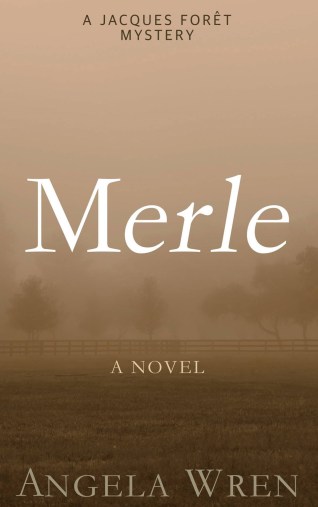
Behind the Book – Merle


Merle - AW


This week I’m joined by mystery writer Angela Wren (yep back to where I’m most at home – murder mystery!) Her novels are set in beautiful France which is enough to get me wanting to read for a bit of escapism. As always I’m fascinated by why people choose the locations they use and what the connection is to that place.


Tell us the basic premise of your novel?


At its most basic level, the central plot revolves around the death of a woman.  That’s were the book begins and there is a short description of the crime scene included below.

la fête des morts


 It was the tightly scrunched ball of paper that captured the attention of Magistrate Bruno Pelletier. His trained eyes swept around the room, only glancing at the naked body in the bath, and came to rest once more on the small, ivory-white mass, challenging and silent against the solid plain porcelain of the tiles. He stepped over the large pool of dried blood, iron red against the white of the floor, and, with gloved hands, he retrieved the object. Carefully prising the paper back into its customary rectangular shape, he stared at the contents and frowned as he read and re-read the single six-word sentence printed there.


 Je sais ce que tu fais


 After a moment, he dropped it into an evidence bag being held open for him by the pathologist.


 all hallows’ eve, 2009′


Did you take any inspiration from any real life crimes?


No, I’m really not that interested in reading about real-life crime. To do so seems quite voyeuristic to me.  But that doesn’t mean that I don’t take inspiration from real life and everything around me.  I do.  The scenario in Merle uses my extensive business knowledge in order to create the project management team that the dead woman worked for when she was alive.  My experience working in that field enabled me to build a whole office organisation to provide the appropriate, and I hope believable, background within which my investigator, Jacques Forêt, had to work.  Some of the scenes in the office were built from a remembered remark or conversation, and by asking myself ‘What If?’, I was able to work up a number of aspects of the central plot.  Naturally, some of it was also pure imagination.  Trying to get the blalance right is difficult but I tend to look at that kind of detail once the story is finished and I’m working through the various levels of edits required.


Why did you choose the setting you chose and do the locations hold any real life significance to you?


The office environment was critical to the central plot, so the plot really dictated the setting.  The location of the Cévennes, in south central France, kind of came about by accident.  I spend a lot of time in France and I was in the Cévennes when the very first idea for a story came to me.  Although it was only September, I woke up one morning to find that it was snowing and the whole countryside had taken on a new white blanket.  The idea that snow could cover someone’s misdeeds had taken root in my head and in December 2015, Messandrierre (Book 1 in the Forêt series) was published.  Merle follows on from Messandrierre and begins a few months afterwards.

As for significance – yes the Cévennes is very important to me.  It’s a fabulous upland area of France.  The village where I like to stay is about 1000m above sea-level, so that’s the equivalent of camping at the top of Snowden, but with better weather!  The area is sparsely populated and the villages are tiny and few and far between.  The principle city of Mende, sits in a valley about 400m further down the mountain and has a population of around 13,000.  Over here, we’d call that a small town!  The scenery is stunning, the weather can change in a moment and there’s a silence there that I can’t seem to find anywhere else.  It’s a location that I will always go back to.


Did it take a lot of research for your locations and story line?


I suppose the truthful answer to that is Yes and Yes.  I’ve been visiting France since I was a teenager, and although I didn’t know it at the time, the research about the country began way back then and has just continued constantly.  I have a book-shelf full of journals created on my many visits, I have acres of photographs and a whole forest full of leaflets, pamphlets, maps, and books about France, all of which I refer to from time to time as I’m writing.

However, specifically for Merle, I did need to get some expert advice.  Luckily I know some very kind people who were willing to put up with my constant questions.  The workings of the office IT system was one issue that I needed to research along with the detailed advice that I required from the West Yorkshire Fire Service – my next door neighbour is a fireman!


When did you know you wanted to be a writer?


When I announced to an elderly aunt one Christmas that I wanted to be Shakespeare when I grew up.  My defence in making such a rash, and now cringlingly embarrassing, statement is that I was very young at the time.  And as you can probably work out, I’m still striving to achieve that particular goal!


Oh didn’t we all want to be Shakespeare at some point! If you could choose a detective to go crime solving with who would you choose and why?


Wow!  That’s a really tough question.  I’ve always been an avid reader and I grew up on a book-diet of Agatha Christie, Conan-Doyle, Wilkie Collins, Allingham, Sayers and many more besides.  I think it would be fascinating to go sleuthing with Gordianus the Finder in the Stephen Saylor books set in ancient Rome.  That would give me the opportunity to look at Roman life and times first hand.  But then there’s Jane Marple isn’t there?  I wouldn’t so much want to go sleuthing with her but I would want to have tea with her and quiz her about herself and her life before she became the astute, elderly observer that she is in the books.  But there’s also the gutsy Vera Stanhope, she may not have much dress sense but she’s a down-to-earth solid character.  I would probably have to tidy her up before we got down to any detective work!

The more I think about this question, the more I realise that perhaps I should just count myself lucky and say Jacques.  Afterall, in creating each of the books, I go sleuthing with him at my side every time I sit at my desk to write.


What are you working on next?


I’m working on the third book, Montbel.  Jacques has an old case that he’s asked to review and once he starts to look at it, the more unanswered questions he finds.  In time, this book has moved on almost 2 years from the previous one and Jacques is living in the apartment in Mende that he bought during the course of book 2.  But, he still comes across the villagers in Messandrierre and spends time there.  Gaston and his wife still run the village restaurant and bar and Pierre Mancelle, although a little older, is still keen to be a policeman when he’s an adult.  It might be a new and intriguing case but there are still some familiar characters around.

A huge thank you to Angela for stopping by….although I kind of need a holiday in France now….

You can keep up to date with Angela and find out more about Jacques Foret and the next mystery he will be embroiled in here –


Twitter

Facebook

Goodreads

Official Website

Buy the series of books on Amazon here

Behind the Book – Forest Dancer

Forest Dancer - Susan Roebuck(1)


Sticking with my look at romance novels, and how woefully ill informed I am on them, I had the great pleasure to chat with author Sue Roebuck about her latest novel, Forest Dancer, a romance set in Portugal (somewhere I’ve always wanted to visit).

Tell us the basic premise of your novel?


It’s about overcoming self-doubt and having the courage to take life by the horns if necessary.

This is a short blurb: Forest Dancer is set in the magical forests just outside Lisbon, Portugal. Classical ballerina with a London company, Flora Gatehouse, has just recently lost her father, but she has also suffered a devastating blow in her career: her failed audition that sees her moving to a small cottage in Lisbon, Portugal, the only inheritance left to her by her father. She embraces the life of a small village with its dark secrets, and falls for the forest ranger, Marco. But the questions are can she totally become part of this little hamlet and can she ever reconnect with her dream to become a principal ballerina?


What was your main inspiration for the story? 


I live close to Sintra (which is about twenty kilometres south west of Lisbon). ( Find out more about this gorgeous locations here ) Being British, I’ve always appreciated how cool and green Sintra is in the boiling hot summers of Lisbon and I’ve often been to ballets and concerts which are held on summer evenings at one of the many monuments in this magical place. Mind you, it was so misty one night that the ballerinas kept slipping about all over the damp stage.

I also love trees and forests (Sintra has its own national park) and I wanted to portray the beauty of them – and their mystery.


I have a thing about trees too…..(endless scary forest scenes in Purgatory Hotel)

When did you know you wanted to be a writer?


The answer’s going to be what all writers say: Always! When I was fourteen I entered a writing competition and won! Goodness knows what was going through my head but the little novelette was set in World War II (of which I knew nothing) in a small village in England. The inhabitants hated the fact that the army had built a training barracks on their land and were trying all sorts of ways to get rid of them. Sounds quite ambitious, doesn’t it? One day I’ll have to read it again. I think my brother gave me a bit of help – he gave me names for the characters, one of which was called Willy Wormtongue.


I’d love to read that!

If you could spend an evening in a Portuguese cottage drinking wine and eating good food, with any famous people – alive or dead- who would you choose?


Well, Byron visited Sintra and I think he would have to be one of the guests. We’d have a riotous time, I think, and drink all the wine that was on offer. Another guest would be Vasco de Gama who was the first explorer to navigate from Europe to Asia. I might have a go at him about his treatment of the natives he came across. Then I’d invite Saint Anthony of Lisbon because I like him and I think he and Byron would have a great discussion. And, also for Byron, I’d invite one of Portugal’s most famous poets and writers. I’d eavesdrop on their conversation for hints.


Ah Byron, I’d love to meet him, can I come too?

What are you working on next?


On another in the Portuguese series (the first one was called “Rising Tide” and set in the Alentejo region of Portugal – which is between Lisbon and the Algarve – in a small fishing village that time and most of Portugal has forgotten). “Forest Dancer” is the second. The next one is called “Joseph Barnaby” and takes place in Madeira. Joe is a farrier who prevents the favourite steeplechaser to run in the Grand National because he believes the horse isn’t fit enough to race. The aftermath of hate-mail, death threats and blackmail send him whirling into a deep depression and all he wants is to go to the end of the world. He finds just the place in Madeira.

Thank you so much for stopping by Sue!

You can get Forest Dancer from Amazon here

Keep up with Sue online and find out more about her here:

Links:

blog: http://www.susanroebuck.com

Facebook: https://www.facebook.com/SusanRoebuckauthor/?ref=bookmarks

Twitter: https://twitter.com/sueroebuck


Behind The Book – Betrayal

BETRAYAL PHOTO

This week I have the pleasure of welcoming fellow Cat Lesley Field to my blog to discuss her latest book Betrayal. I recently discovered that I have very few romance novels on my read list – Wuthering Heights seems to be the only one! So in an attempt to remedy this I am having a chat with Lesley about her ‘contemporary romance.’


Tell us the basic premise of your novel?


I’m never really sure where my ideas come from, which is probably a bit scary.

However, Betrayal, is about a lawyer, Jessica, who thought her life was settled and she knew where she was going. Then suddenly it was all gone and she was faced with starting again in a new city and in a new job. But a chance meeting forced her to face her own inhibitions and she ended up having a one night stand with someone she felt an instant connection with. But inhibitions returned in the cold light of day and she fled, never expecting to see him again. But life has a way of taking charge and her one night stand appeared again. Sadly things were not as she thought and she was not prepared to be betrayed again. Fighting the attraction between them she then found herself caught up in a plot to frame someone. But is she in time to save them? And will she get her happy ever after?  You will have to read the book to find out.


Did you take any inspiration for your story from real life?


Partly.  Before I retired I was a Personal Injury Lawyer so I gave my heroine the same profession. She became disillusioned with the law, and to some extent I did towards the end of my career. So I guess I took that from my own personal experiences. There is a horse in the story and again that is taken from my own love of horses.


Why did you choose the locations you use and did it take a lot of research? Do the locations hold personal significance?


I set my contemporary romances in Canada, as it is the home of my heart. My parents were going to emigrate before I was born, but then changed their minds, so I really should have been born Canadian. I love the country and my husband and I have family and friends there so visit as often as we can. The location just outside Calgary is based on personal knowledge. The town where my heroine moves to is loosely based on a town we visited. For research I use the internet, or just go back into my head and remember visits and what I did, what I saw and how I felt at the time. There is a section in Betrayal which is set in The Core shopping mall in Calgary. I went there with my husband for research and we had lunch and listened to the grand piano being played. So that scene is taken from our visit.


What is you ideal writing environment?


My ideal writing environment would be to have my own writing room where I had a computer set up permanently, with all my research folders to hand. That is my dream. Reality is, I write on my laptop which is on the dining table. So I have to clear everything away when we need to eat in the evening. But I have a wonderful view of the garden so I can’t really complain.


If you could have an evening in a hotel restaurant with any famous character/person alive or dead, who would you choose?

I think I would love to meet with Sarah Maclean who writes historical novels. I write historical as well as contemporary and I love her style of writing.


What are you working on next?


At the moment I am working on an historical series called, Lords in Love. There will be 4 books in the series. I have books 1 and 2 completed. I have just finished the first draft of book 3 and book 4 is still in my head.

Betrayal is available now on Amazon through Crooked Cat Books!


Keep up with Lesley online here –
www.lesleyfield.com

Facebook

Twitter

Talking About Dead People with Jennifer Wilson

When I was fortunate enough to chat with author Jennifer Wilson about her books recently, I felt I just wanted to keep talking about what appears to be a common subject between us – ghosts!

My book is all about being dead, and her books feature some pretty famous ghosts from UK history, so I could just talk to her all day about it all! So I asked her to appear on a one off special interview on my blog about why she writes about them and how she actually feels about the afterlife.


Hi Anne-Marie, thanks for inviting me along today, to chat about a mutual topic of ours – ghosts!


You have included ghosts in several of your novels – where did your interest in ghosts come from?

It’s really odd, to be honest – I’m really not a ghost person… I’m terrified of the notion, and have even gone out of my way to avoid places known to be haunted. But when I was thinking about a ‘way in’ to write about Richard III a few years ago, I came across a competition for a poem about ghosts, and when it struck me that the ghosts of Anne Boleyn and Richard III could potentially have a fair bit in common, it seemed the perfect solution.

I suppose as well, it may not be ghosts per se, but I’ve always been interested in the spirit (pun intended!) of a place, and that connection with the people who once lived, worked or died there. I think that comes across very strongly in some buildings and sites, and so the notion of writing about ghosts came very naturally.


I’ve always been fascinated with real life ghost stories, one of my favourites is the haunting of Borley Rectory in Essex. (read about Borley here!) What’s your favourite real life ghost story?

It’s one I came across quite recently actually, set in Dunstaffnage Castle, near Oban. Apparently, the ‘Ell-maid of Dunstaffnage’ wanders the ramparts, wearing green, and is supposedly linked to key events in the lives of the Campbell family, the hereditary owners of the castle. Her mood determines luck – smiling means good, crying, well, not. A related tale is that as part of their hold on the castle, the Hereditary Captain of the castle must spend three nights a year in the castle, and some have experienced ghostly goings-on during this sleepover. There’s certainly a feel to the place; for such a stunning castle, in a beautiful setting, it has a darkness about it.


Have you spent a lot of time in your book locations? Which is your favourite?

I think it has to be Edinburgh’s Royal Mile. I’ve loved Edinburgh since I was a child, and since moving back to the north-east, it’s become a bit of a bolt-hole for me, visiting pretty regularly to see friends, or even just wander around the place. When it came to another destination for a Kindred Spirits book, and the thought of Westminster Abbey terrified me, Edinburgh was the obvious choice. It also gave me the chance to write about Mary, Queen of Scots, my second favourite monarch, in Kindred Spirits: Royal Mile, having finally included Richard III in Kindred Spirits: Tower of London.


Have you ever had any paranormal experiences?

Once, I think. My parents were gardening, whilst I was pottering about inside. After a while, I went outside to ask my dad something, and saw him at the top of the back garden. When I started speaking to him however, he completely ignored me, and the next thing I knew, I heard his voice behind me, as he came around from the front garden. Looking back at the man I’d started talking to, there was nobody there. Apparently our estate is built on the site of an old market garden, so I can only assume that first man was the ghost of a former gardener…


I loved writing about the afterlife in my own book, what so you like about writing about dead people?

For me, it’s getting an idea of what people were like, how they lived, and what they thought about things. I also love having that little bit of wiggle-room, given that my ghosts, although of historical characters, are also modern people, to the extent that they are living ‘now’, as well as throughout every moment since their birth. It’s quite nice being able to write Anne Boleyn rolling her eyes and saying ‘whatever’, because actually, I think she was always quite a ‘modern’ character, and now she can be even more so.


What do you think the afterlife is like?

I would like to think it is a combination of how we both envisage it in our writing. I suppose my ghosts are in a purgatory of sorts, but some have chosen to stay there, not taking their chance to pass onto what I’ve always assumed is heaven, but never actually gone into any great length. There’s a mix of good and bad characters there, and a sense of having to work things out in this bit of the afterlife before you get the chance to move on.


Would you ever go ghost-hunting?

I just couldn’t… I’ve become a stronger believer about the afterlife in the last few years, and the only ghosts that ghost-hunters seem to encounter are those that are less than friendly! If I could just go and natter with some (nice) dead monarchs, or lords and ladies from the various historical sites I visit, then fine, but plague victims, criminals and tortured souls would be a bit too much for me.


If you could ask any dead person about the afterlife who would you choose?

Well, if we work on the assumption that they are able to visit the realm of the living, like both of our sets of characters can, then I think I’d have to go a fair way back, just because that way, the person I ask will have seen and heard a heck of a lot over the years. So, following that logic, and my own personal preferences, I’ll have to go for Richard III. It was never really going to be anyone else…

You can get Jennifer’s fabulous books here –

Jennifers Amazon Page


Jennifer’s debut novel, Kindred Spirits: Tower of London, was released by Crooked Cat Books in October 2015, with Kindred Spirits: Royal Mile following in June 2017.

Kindred Spirits: Westminster Abbey will be released in June 2018.

She can be found online at her website, on Twitter and Facebook, as well as at The Next Page’s website. Her timeslip historical romance, The Last Plantagenet? Is available for download from Amazon.

And you can get my book here!

Purgatory Hotel by Anne-Marie Ormsby


If you want to chat about ghosts with me shout me on Twitter !

Behind the Book – Topaz Eyes

new TE(1)


It gives me great pleasure to welcome the the lovely Nancy Jardine to my blog today. Her book Topaz Eyes caught my eye and I wanted to get the background inspiration for such an amazing adventure!


Welcome  Nancy, thank you so much for taking the time to chat with me!

Hello, Anne-Marie. Thank you for the opportunity to visit your blog. I aim to ‘get out’ a lot more this year so your invitation is much appreciated!


Tell us the basic premise of your novel?

Topaz Eyes has been called a ‘fabulously dangerous quest for a precious collection of emerald jewellery’ that once belonged to a Mughal Emperor. It’s also been called ‘ a deep plot of intrigue across Europe’ and beyond. The novel centres on a fictitious European family of third generation cousins. In their hunt for hugely expensive missing jewellery that the family once owned, some cousins are nice but others are downright nasty, even murderous.

Why did you choose the locations you chose and do they hold any real life significance to you?

All are personally significant in some form. The story begins in the beautiful university town of Heidelberg, Germany, chosen because my daughter spent a year at the university and I visited her there. Keira Drummond, my main female character, also spent time at Heidelberg University – isn’t that an amazing coincidence (*wink, wink*)? Some of the action takes place in Amsterdam, Holland, because I lived in Holland for three years and adore the country. I won’t give away any spoilers but one of the complex relationships in the story mirrors a situation I found myself in when I lived in Holland. Vienna features just because it’s a fabulous place to be a tourist. I decided that one cousin had to be American so I used locations in Minnesota, USA, which I’ve also been to. Keira Drummond is an Edinburgh lass because I wanted a ‘Scottish’ element in the story.

What inspired this exciting adventurous novel?

Topaz Eyes is my second contemporary mystery that revolves around an ancestral theme. The first ‘Family Tree’ I invented for my mystery Monogamy Twist  was a fairly simple one but when I started Topaz Eyes I  wanted to create a much deeper mystery with a bigger cast of related characters who had a common purpose linking them together. I then had to think up an exceptionally absorbing reason for a bunch of third generation cousins to be on a murderous quest, family members who are essentially all strangers at the outset of the novel. The 1880s matriarch of the family is from an Amsterdam family who own a prestigious jewellery business. This meant I could have lots of contemporary action happen in different worldwide locations since her descendants end up scattered around after the Second World War. I mainly used my memories of the locations which meant only some up-to-date fact checking was necessary. I remember having a lot of laughs when I was creating the family tree and the incidents that happen in the story!

Did it take a lot of research to come up with the story behind the jewellery once owned by a Mughal Emperor?

My main research for this novel was about emerald collections, especially those originally owned by Mughal emperors. I’m fascinated that a piece of jewellery designed for a Mughal Emperor in 1580, 1680 or even 1780, could be completely different by 1880! I hadn’t really appreciated that designs created for a particular woman (wife or one of the many concubines) were rarely appropriate for another woman and that it was commonplace for the gems to be reset into new jewellery. That cemented a really deep mystery because if you don’t have many clues about what an item might currently look like, then how difficult is it to bring that collection together? Topaz Eyes ended up being a mystery within a mystery but you’ll have to read the story to uncover that connection!


If you could go on a global adventure with anyone (alive or dead) who would you choose?

I’m cheating here because although I write contemporary mysteries, I also write historical fiction. In Book 4 of my Celtic Fervour Series (unpublished), my main characters are mainly Celtic but there’s also General Gnaeus Julius Agricola. Agricola was the commander of the Ancient Roman army which marched all the way to north east Scotland in c. A.D. 84 and then they left without properly absorbing the area into the Ancient Roman Empire! The only reason we know this happened is because Agricola’s son-in-law – Cornelius Tacitus – wrote about Agricola’s military campaigns. I’d love to journey back to c. A.D. 95 and spend time in Rome because that’s probably when Tacitus was writing about Agricola’s exploits in northern Britannia (The Agricola was published in A.D. 96). That way I might get the true version of what happened! And…I’d love to describe to  Tacitus what Rome is like today having visited there in 2016.

What are you working on next?

The big plan is to have Book 4 of my Celtic Fervour Series published in the spring (2018). After that I’ve got two projects already started that need a lot of work. The first is Book 2 of my Rubidium Time Travel Series- a Victorian adventure. The second is a family saga that begins in Scotland c. 1850 – Book 1 (of 3?) being another Victorian setting. Then in the fullness of time I’ll get back to Book 5 of my Celtic Fervour series…or maybe I should write that next? Who knows (**smiley face here**)


Nancy Jardine is a member of the Romantic Novelists Association, the Scottish Association of Writers, the Federation of Writers Scotland and the Historical Novel Society. She’s published by Crooked Cat Books and has delved into self publishing.


You can find her at these places:

Blog: http://nancyjardine.blogspot.co.uk  Website: www.nancyjardineauthor.com/

Facebook: http://on.fb.me/XeQdkG & http://on.fb.me/1Kaeh5G

email: nan_jar@btinternet.com  Twitter https://twitter.com/nansjar

Amazon Author page http://viewauthor.at/mybooksandnewspagehere

Goodreads https://www.goodreads.com/author/show/5139590.Nancy_Jardine


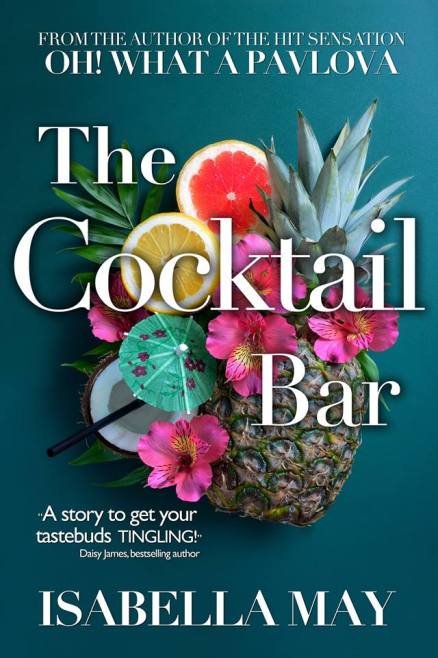
Behind the Book – The Cocktail Bar

coctail bar


So very happy to be welcoming author Isabella May back to my blog today. Her new book The Cocktail Bar will be out on the 13th February and I love the front cover! So apparently there’s more than just cocktails on the menu here and a mystical undercurrent that has caught my attention…..

Welcome back Isabella!

Thank you so much for inviting me again, Anne-Marie! I come bearing gifts (well, one gift): a Tor In The Mist… one of the uniquely created cocktails found in the pages of my new book, The Cocktail Bar – created by author Vanessa Couchman. Enjoy. Just watch the dry ice (fog)… it creates a beautiful effect but is enough to induce frostbite…


Tell us the basic premise of your novel?

Rock star, River Jackson, is back in his hometown of Glastonbury to open a cocktail bar… and the locals aren’t impressed.

Seductive Georgina is proving too hot to handle; band mate, Angelic Alice, is messing with his heart and his head; his mum is a hippie-dippy liability; his school friends have resorted to violence – oh, and his band manager, Lennie, AND the media are on his trail.

But River is armed with a magical Mexican elixir which will change the lives of the Three Chosen Ones. Once the Mexican wave of joy takes a hold of the town, he’s glad he didn’t lose his proverbial bottle.

Pity he hasn’t taken better care of the real one…


Tell us a bit about why you used Glastonbury as a location? Is it anything to do with the area’s magical reputation?

I have long thought that the UK’s (arguably) most mystical town isn’t featured as a backdrop in mainstream novels anywhere near enough. So, yes, Glastonbury popped up in my first book, ‘Oh! What a Pavlova’… and here it is again in ‘The Cocktail Bar’. There’s nowhere quite like it, and, having grown up on the ley lines of Avalon, I can (hopefully) offer a unique perspective in terms of scene setting and characters!


What inspired you to write this story?

Honestly, a distinct lack of cool places to hang out as a late teen (ie. an official drinking age teen) and an early twenty-something. I was still living in the town during that period of my life and a night out on the town consisted of scarpering north, east, south or west to somewhere more ‘happening’… frequenting the local working men’s pubs… or putting on a pair of fairy wings and engaging in tantric yoga.
In other words, Glastonbury’s high street has been screaming out for a delectable cocktail bar (such as River Jackson’s) for a very long time.


Are your lead characters based on anyone?
River Jackson is loosely based on any one of the indie singers who hail from the town and its surrounding areas. Very loosely though… for his rival in the book is Gary Stringer from local-band-gone-global, Reef. Gary actually went to my high school!


I’m a big fan of cocktails – mine’s a Pina Colada by the way – what’s your favourite cocktail and did you do a lot of research for the drinks on offer at the Cocktail Bar in your story?
You and me both. I love a well-made Pina Colada. It really is hard to beat. But just like a Tiramisu… or a Carrot Cake, the mixology of said tipple can be very hit and miss. I do recommend the Waldorf Astoria’s version in NYC though.
But I digress.
Yes, I had to do a fair bit of research to write The Cocktail Bar because River, as a mixologist, is the antithesis to all things Sex on the Beach and Screaming Orgasm. Rather he’s all about the unusual and sophisticated. If I had to choose one of the cocktails gracing his menu (other than the unavoidable lure of the ‘Magical Mañana), I’d plump for the Frisky Bison; liquid alcohol apple pie in a glass. It sounds delectable.


If you could throw a cocktail party who would be on your guest list?
What a great question… hmm. This requires a cuppa and some thought. Okay, I’ll go for a handful of different personalities who could fast create a party atmosphere:

Prince would be in a number one on that list. I know that would require something of a miracle, but he just has to be there. Then I reckon we’d need Nigella to make sure we were getting some decently exciting drinkies. Janet Street Porter because I love her wit and sarcasm and we need some good (heated) discussion. Leonardo DiCaprio for the eye candy. And Lee Evans for the comedy. Yeah, I think that would make the perfect mix.


What are you working on next?
I’m just finishing off the first round of edits for ‘Costa del Churros’ (trying not to eat too many of them in the process), and that will be released in the autumn. It’s an exciting year.


You can follow Isabella May on her website and social media here:

www.isabellamayauthor.com

Twitter – @IsabellaMayBks

Facebook – https://www.facebook.com/IsabellaMayAuthor/

Instagram – @isabella_may_author


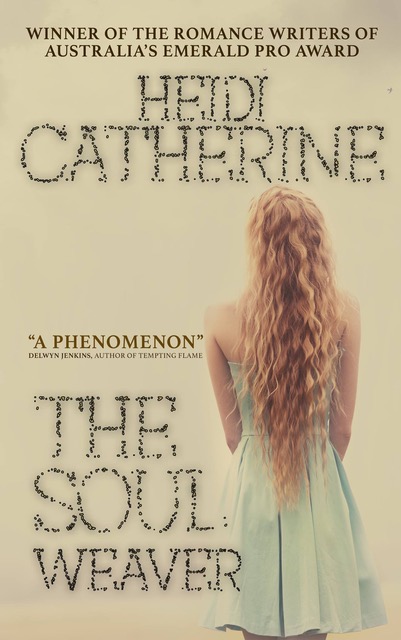
Behind the Book – The Soulweaver

Final Cover Soulweaver


This week I’m very excited to be talking to Australian author Heidi Catherine about her new novel The Soulweaver.

I’ve always had a fascination with the afterlife and the concept of reincarnation, and they are major themes that I have kept coming back to in my own writing. Everyone feels differently about the idea of an afterlife and everyone has a different idea of what it might be like. (If you have read Purgatory Hotel you will know my own vision is a bit unpleasant for those that deserve it.)

When I read the synopsis of Heidi’s novel I was instantly intrigued – I had found a kindred spirit! So I was quite eager to pick her brains about one of my favourite subjects and learn more about her own thoughts that had inspired the novel.


Tell us the basic premise of your novel?

The Soulweaver is a story about a girl who’s haunted by memories of having lived before. As these memories sharpen, she has to choose between the man she loved in her past life and the man she loves now. I was fortunate enough for this book to win the Romance Writers of Australia’s Emerald Pro award, which was a huge honour.

What or who inspired you to become a writer?

My mum has always loved to write and had a children’s book published when I was in my early twenties. This was great inspiration for me to turn my own love of writing into something more, as I could see what was possible with hard work and persistence. Mum is now my biggest fan and reads all of my first drafts. Her very unbiased opinion is that they’re all brilliant…


Are your locations based on real places?

The Soulweaver is set in Australia, Hong Kong, London and New York, which are obviously all real places. But there are also scenes that are set in ‘the Loom’, which what most people would call heaven or hell. It’s described in the book as “a place where reward and redemption are rolled into one”.  If we do go somewhere after we die, I’ve always thought it would be the one place. I can’t see how it’s possible for the universe to be so black and white that one soul is considered good and another evil, when there are so many shades of grey. I really enjoyed being able to explore this concept as I wrote the novel.


Did it take a lot of research for your locations and do they hold any real life significance to you?

The story is told in parts, with each part taking place in a different city from the point of view of a different character. I’m Australian so the scenes set there didn’t require too much research and I’ve spent time in Hong Kong and London so could also draw on my experiences there. I’ve never been to New York, so those chapters required a little more research. Google is a writer’s best friend! I really liked how changing the setting gave each part of the book a distinctive feel. As for the Loom, that required a whole lot of imagination rather than research, which I always find far more enjoyable.

There’s a supernatural feel to the story, and obviously a lot of it is based around reincarnation, is this something you believe in?

The idea of reincarnation has always fascinated me and I would very much like to believe it’s real. I’ve heard some incredible (and very convincing) stories about children remembering their past lives, with these memories fading as they’ve grown older. I’ve also met people who I’ve been certain I’ve met before. In the first chapter of The Soulweaver, Hannah sees Reinier for the first time and is overwhelmed with the feeling she’s seen him a million times, yet she’s seen him never. It’s a feeling I’m sure many readers will relate to. Reincarnation makes a lot of sense to me, and although nobody can be completely certain as to what happens to us after we die, I’m positive that something happens. The Soulweaver is just one of a billion possibilities.

Tell me an ideal set up for a day of writing – where are you, is there any music etc?

I mostly write at home when my kids are at school. We moved house about a year ago and I claimed one of the living spaces as my writing room. I’ve filled it with books and have a desk in the corner near the window. Usually I’ll light a candle, put on some music and read my angel cards. Then I’ll get stuck into it. If the words don’t flow, then I’ll take my dogs for a walk and try again. My dogs are big fans of writer’s block.


What are you working on next?

I’m working on Books 2 and 3 of The Soulweaver series, which follow my characters into their next lifetimes. I also have a couple of crime novels and a middle grade novel sitting on my computer, which I’d like to revive. And I’ve recently published a prequel novelette to The Soulweaver series, which is called The Moonchild and available for free on Amazon.

The Soulweaver is out now on Amazon – Buy The Soulweaver on Amazon

Book 2 of the Soulweaver series The Truthseeker is out through Crooked Cat Books on 19th March 2018.


You can keep up with all of Heidi’s news here!


Heidi’s Website

Heidi on Twitter

Heidi on Facebook

Heidi on Goodreads


Behind the Book: Heathcliff


Back in 1992 when I was a moody, misunderstood teenager, desperate to read all the literature I could lay my hands on, I bought a cheap copy of Wuthering Heights after seeing a poster for the movie adaptation starring Ralph Fiennes. I loved the book and not long after watched as many tv/movie adaptations as I could.

I studied it later for my GCSE’s and re read it countless times over the years that followed.

I was in love with the supernatural element of the love story, the fierce bond between Cathy and Heathcliff that seemed to survive beyond death, her childish rejection of him tying their souls together forever. It’s fair to say it influenced my own novel in part, just because I could never get past the drama of the fiery love affair.

When I heard that my fellow Crooked Cat Books author Sue Barnard was releasing a spin off novel I was intrigued, and very excited to learn more. And also to have a bit of a geek off about Heathcliff with a fellow fan.


Tell us the basic premise of your novel?

In the original Wuthering Heights, Heathcliff disappears from the story for three years and returns as a rich man.  What might have happened to him during that time?


Wuthering Heights is one of my favourite novels. I recall being very affected by the relationship between Cathy and Heathcliff. How would you describe it to someone who has never read the book? 

In a word: complicated!  She loves him (or claims to), yet she marries someone else – then expects her husband to welcome her old love back into their lives!  Result: anger, frustration and heartache all round.


What inspired you to take on the story and create a backstory for Heathcliff’s missing years?

It was a chance remark by a former school friend.  More years ago than either of us care to remember, we studied Wuthering Heights for English Literature O-Level (as it then was), along with Shakespeare’s Julius Caesar.  The latter went on to provide the setting for my third novel, The Unkindest Cut of All (a murder mystery set in a theatre).  My friend commented on the connection, and asked jokingly if my next writing project would also be based on something we’d done at school.  I replied, equally jokingly, “How about Heathcliff?”  At the time I laughed off the idea, but somehow it just wouldn’t go away.


 Many people feel very negatively about Heathcliff; I have always had a sort of sympathy for him. How would you describe your feelings towards him?

When I started writing the book I promised myself that I would try to portray Heathcliff in a sympathetic light.  I think he’s a very troubled soul, and I’ve tried to explore the possible reasons why.  Pivotal to the story, of course, is that he never gets over Cathy’s decision to marry Edgar Linton.

To be honest, I’ve never really liked Cathy.  She starts off as a spoiled little brat, grows into a spoiled big brat, and ends up as a spoiled dead brat.  Heathcliff and Edgar are both devoted to her (in their different ways), but in my opinion she isn’t worthy of either of them.

One interesting discovery I made during the course of my research is that Heathcliff is only about sixteen or seventeen when he disappears.  Having seen him portrayed several times on screen by actors who are in their twenties or thirties, I hadn’t previously appreciated how young he was.


Did it take a lot of research for your locations and story line?

Yes.  It’s always important to get your facts correct, but even more so if you’re writing anything historical.  You can be sure that if you get even the tiniest detail wrong, some eagle-eyed reader will pick up on it, and it will come back to haunt you for ever.

The dates in Wuthering Heights are very precise (Heathcliff’s missing years are 1780-1783), which proved to be extremely constraining.  I originally wanted him to have spent those years as a pirate, or possibly to have made his fortune in the American or Australian gold rush.  But when I started my research I soon discovered that I couldn’t use either of those ideas; the heyday of piracy was too early, and the gold rush years were too late.  So I had find something which did fit with those exact years, and work my story around that.  As to what that turned out to be, you’ll have to read the book to find out!


What is your writing environment like? Where is it etc?

It’s all over the place.  My computer (where I do my main writing) is set up at a desk in the front room, but I have notepads and scraps of paper in just about every room in the house, because I find that inspiration can strike at any time.  My smartphone, which lives in my pocket, is particularly useful if I need to make notes when no other option is available.


 If you could sit down and have drinks with any famous writers (alive or dead) who would you choose?

I’d start by inviting all my fellow-authors at Crooked Cat Books.  Then I’d invite Shakespeare (having written two novels and several poems inspired by his work), and Emily Brontë (though with some trepidation, in case she doesn’t like what I’ve done with her most famous creation!).  Then I’d add some great crime writers, such as Agatha Christie, Dorothy L Sayers, Josephine Tey and Val McDermid, plus some comedy writers, such as Ronnie Barker, David Renwick, Tony Robinson, Ben Elton, Stephen Fry, the Horrible Histories team and the Monty Python gang.  And no writers’ gathering would be complete without Terry Pratchett and J K Rowling.

At this rate, I think I’m going to have to hire a whole pub.


Well that sounds like a great night out! I will definitely be there!

Big thanks to Sue for giving me a sneaky early interview about Heathcliff, I am very much looking forward to reading the book and returning to the world of the brooding anti-hero again.

Until then you can follow her on all the links below and read her other books while you wait to find out what became of the mysterious man during his missing years…..


Blog   Facebook   G+   Twitter   Instagram   Amazon  Goodreads

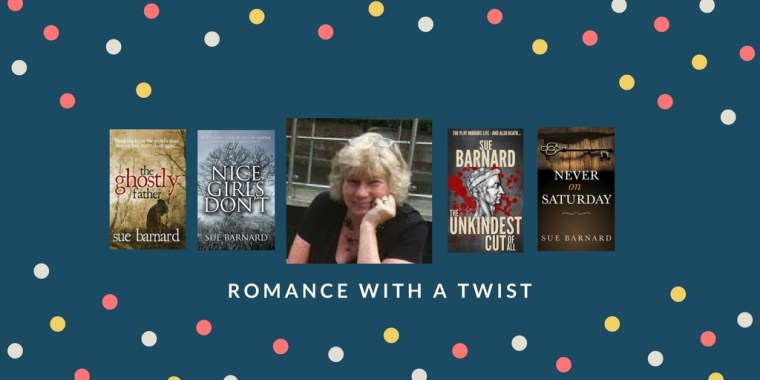
Romance with a twist(2)

NOVELS:

The Ghostly Father: Amazon, Smashwords, Kobo, NookApple iBooks, GooglePlay

Nice Girls Don’t: Amazon, Smashwords, Kobo, NookApple iBooks

The Unkindest Cut of All: Amazon, Smashwords, Kobo, NookApple iBooks

Never on Saturday: Amazon


Heathcliff: coming in 2018


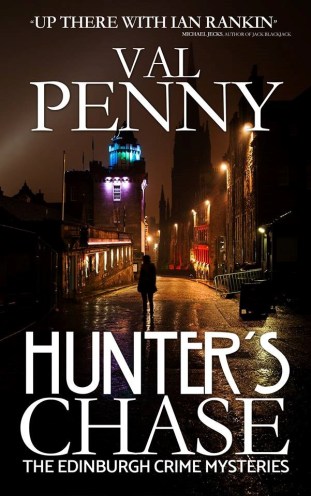
Behind the Book – Hunter’s Chase

HUnters Chase cover


This week I am delighted to welcome author Val Penny to my blog. Her Edinburgh based crime novel Hunter’s Chase is due out through Crooked Cat Books on 2nd February 2018.

I am a lover of crime fiction, from Jo Nesbo to Patricia Cornwall and Agatha Christie to Arthur Conan Doyle, my love of sleuthing has been firmly set from a young age (I blame my parents!) I grew up in a busy household full of brothers and sisters who also loved to read crime fiction and I would always grab what they had finished with. The Detective is always the greatest character (followed closely by their nemesis) and I always love the development of their personality and how they solve the crime in question.

So naturally when I heard about Hunter’s Chase and found I had the opportunity to ask a few questions I jumped at the chance!


Tell us the basic premise of your novel?


Hunter by name, Hunter by nature: in Hunter’s Chase, Detective Inspector Hunter Wilson struggles to ensure the crime in Edinburgh does not go unpunished. Hunter’s Chase introduces a new detective, DI Hunter Wilson into Tartan Noire.

I think all crime novels explore the triumph of good over evil. The readers know the criminals will not succeed. Still, the thrill of the chase and the problems overcome to achieve justice for the victims must enthral and satisfy the readers.


Did you take any inspiration from any real life crimes? 

I did not refer to any specific real life crimes but I did want to explore power and politics. Also, as I have a large family, the importance and problems caused by family ties is interesting to me.

Big cities all have issues with illegal drug use. One of the hidden problems is the risk to the health and security by people who are functioning drug abusers, who may continue to study or hold down challenging jobs. I find this both confusing and fascinating.


Is your lead character, DI Hunter Wilson inspired by anyone?

Hunter Wilson, like all my characters in Hunter’s Chase, is a combination of several people that I have found interesting. I needed my main protagonist to have certain characteristics including patience, perseverance and a desire to achieve justice for those who could not attain that for themselves. Hunter is a compassionate man who fights for the underdog and is a fine team player. These are important qualities in my main character.

But I also needed Hunter to have flaws. Everybody has faults and to make Hunter believable, he had to have them too. He is not a saint. He is divorced, he is untidy, he likes to win, he bears a grudge.


Why did you choose the setting of Edinburgh and do the locations hold any real life significance to you?

Although I am originally from California, USA, I lived in Edinburgh, Scotland for many years, so it is a city I know well. I chose Edinburgh as the setting for Hunter’s Chase because it is a beautiful, multi-cultural city which is well-known and loved around the world. Edinburgh is a big enough city for any problem that Hunter needs to solve to plausibly have taken place. Nevertheless, because it is a city of only half a million people, in many ways it is like a big village: there is a feeling that everybody knows everybody else. That is an amusing conceit when I am writing.


Did it take a lot of research for your locations and story line, how did you research the police work?

I did need to do a lot of research for Hunter’s Chase. I was surprised by how much I enjoyed that.

When I was choosing places for action to take place in my novel, I needed to check that what I was asking of my characters could actually happen. That was fun. Revisiting and exploring again the beautiful city of Edinburgh is always a joy.

Also, you will not be surprised to know that I do not have first-hand knowledge of drug trafficking! I found the research for that quite exciting: of course it was all theoretical research.

I had to research the roles of Crime Scene Investigators too and received a great deal of assistance with that from my friend Kate Bendelow. Her book, The Real CSI: A Forensic Handbook for Crime Writers, is indispensable. I was also lucky to have good support when I was researching police procedures. This came from former Detective Chief Inspector Stuart Gibbon. His book, The Crime Writers’ Casebook is invaluable to those writing historical or modern day crime stories.


What are you working on next?

I am presently working on the sequel to Hunter’s Chase –  Hunter’s Revenge. My publishers, Crooked Cat Books, have just confirmed that it will be published in August/September 2018, so I better get a move on and finish it.

Hunters Chase will be released through Crooked Cat Books on 2nd February 2018, pre order your copy here

You can keep up with whats happening with Val on the following links;


Val Penny Website

Val on Facebook

Friends of Hunter’s Chase Facebook Group

Val on Twitter

Val at Crooked Cat Books

Book review – Purgatory Hotel by Anne-Marie Ormsby

Wonderful review from author Katharine Johnson

katyjohnson1's avatarKatys Writing Coffee Shop

IMG_6481

I love stories where a main character is a mysterious building and had heard lots of good things about this one. When Anne Marie visited this blog recently to talk about her new book I was hooked.

After a brutal attack Dakota Crow finds herself a guest at a grim Victorian hotel with a menacing clientele. It soon becomes clear that this is no ordinary hotel. She is already dead but why is she lumped in with rapists and murderers and the shadowy figure that stalks her down the dark corridors? And how can she escape to somewhere safer?

She must have done something bad in order to be housed here. The only way to move on spiritually is to face her own demons and make amends for the crime she committed in life but what can she possibly have done to deserve this?

Through a book in the Library…

View original post 119 more words